
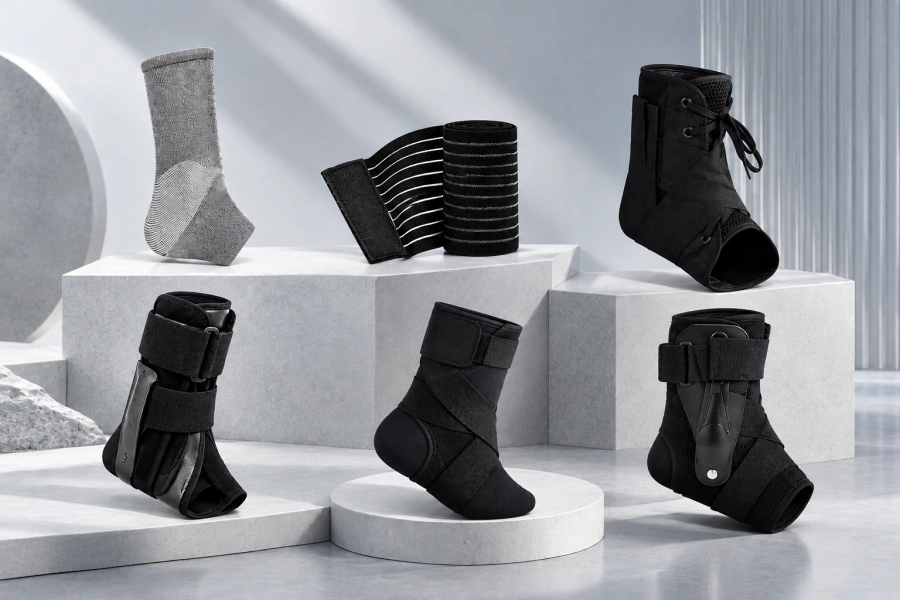
Custom ankle brace design plays an important role in developing competitive sports support products for private-label brands, sporting goods distributors, importers, and retailers. Beyond appearance, a successful design must balance ankle stability, freedom of movement, comfort, durability, and manufacturing feasibility. For B2B buyers, these factors influence product differentiation, customer satisfaction, and long-term profitability.

Whether you are launching a new sports support line or improving an existing product, understanding the key design decisions before production can help reduce development risks and avoid unnecessary revisions. Working with an experienced OEM/ODM ankle brace manufacturer also makes it easier to translate market requirements into a product that can be manufactured consistently at scale.
Define Your Target Market and Sports Application
The first step in custom ankle brace design is to define who the product is for and how it will be used. A compression sleeve for runners has different requirements from a lace-up ankle brace intended for basketball players. Similarly, a product designed for everyday athletic support may not require the same structural reinforcement as one developed for higher-demand sports applications.
Before requesting a quotation, B2B buyers should identify the intended sport, target customer group, expected support level, retail price range, and primary sales channels. These details help the manufacturer recommend an appropriate construction and material combination.
For example, a running-focused ankle support may prioritize low weight, breathability, and a close fit inside running shoes. Basketball products may require greater attention to lateral stability, secure fastening, and compatibility with high-top footwear. Products intended for gym training may focus on flexible movement, sweat management, and easy wear.
The goal is to create a clear product brief before development begins. A well-defined brief gives the manufacturer a practical framework for evaluating design options, estimating costs, and preparing the first sample.
Choose the Right Ankle Brace Design and Support Structure
The structure is one of the most important decisions in ankle brace product development. It affects how the product fits, how users put it on, how it responds to movement, and how easily it can be manufactured. Buyers should select a construction based on the intended application rather than assuming that a more complicated brace will always perform better.
Compression Ankle Sleeves
Knitted compression ankle sleeves are suitable for product lines that prioritize a low-profile design, stretch, and a close fit. Different yarn combinations, knitting densities, and reinforcement zones can be evaluated to achieve the desired balance of elasticity, breathability, and support.
Lace-Up and Wraparound Ankle Braces
Lace-up and wraparound constructions allow users to adjust the fit through laces, straps, or hook-and-loop fasteners. They may suit sports applications where adjustable support and secure positioning are important. During development, buyers should evaluate fastening strength, strap placement, ease of adjustment, and pressure distribution.
Neoprene and Hybrid Designs
Neoprene ankle braces can provide cushioning and a close-fitting structure, while hybrid designs may combine textiles, elastic straps, padding, or support components. These options give brands more flexibility when developing differentiated products. However, additional layers and components can increase bulk, heat retention, assembly complexity, and unit cost.
When evaluating ankle brace design options, buyers should ask the manufacturer to explain the intended function of each structural element. This makes it easier to distinguish useful features from additions that increase cost without providing meaningful value to the target customer.
Select Materials for Comfort, Performance, and Durability

Material selection directly influences the performance and market positioning of a custom ankle brace. For sports products, the material system should be evaluated according to breathability, elasticity, moisture management, abrasion resistance, stretch recovery, and the intended level of support.
Knitted nylon or polyamide blends combined with elastane can be considered for lightweight compression sleeves. Polyester-based textiles may also be used depending on the desired texture, durability, and moisture-management characteristics. Neoprene, elastic fabrics, mesh panels, and cushioning materials may be appropriate for different wraparound or structured designs.
No single material is ideal for every sports application. A thick, cushioned construction may offer a different wearing experience from a lightweight knitted sleeve, while a highly elastic fabric may require additional structural elements to achieve the intended fit and support. Buyers should assess materials as part of the complete product.
For bulk purchasing, it is also important to confirm material specifications, color consistency, dimensional stability, and performance after repeated use and washing where applicable. These checks help reduce variation between the approved sample and subsequent production batches.
Balance Support, Fit, and Freedom of Movement

A well-developed sports ankle brace should provide its intended level of support without unnecessarily restricting normal movement. Compression, strap tension, panel placement, and the shape of the heel opening all influence the wearing experience. Small design decisions can make a noticeable difference in how the product fits different users.
For knitted sleeves, developers can evaluate knit density, stretch direction, ankle coverage, and the transition between compression zones. For adjustable knee braces, strap length, fastening position, and closure strength deserve particular attention. The heel opening and instep area should also be reviewed to reduce unwanted bunching, slipping, or interference with footwear.
Sizing is equally important for B2B projects. A size range should be developed using clear measurement references and consistent grading rules. Depending on the product, measurements may include ankle circumference, instep circumference, or other relevant dimensions. The manufacturer and buyer should agree on the size chart and tolerances before mass production.
Prototype evaluation should include users or testers who represent the intended customer group. Fit, comfort, ease of movement, fastening performance, and compatibility with the target footwear should be reviewed under appropriate use conditions. Any performance claims should be supported by suitable evidence.
Define Your Ankle Brace Customization Requirements
Ankle brace customization involves more than adding a logo to an existing product. For B2B buyers, it is an opportunity to create a product that fits the brand identity, target price, sales channel, and customer expectations.
Product Appearance and Branding

Brands can explore different color combinations, knitted patterns, logo placements, labels, and packaging formats. Depending on the construction, branding methods may include jacquard knitting, heat transfer, printing, or sewn labels. The selected method should be compatible with the material and durable enough for the intended use.
Structure, Components, and Sizing
Customization may include sleeve height, heel opening, compression zones, strap configuration, padding placement, and size grading. Buyers should prioritize changes that improve the product’s function or market fit instead of adding features solely to make the design look more complex.
Packaging and Retail Presentation
Packaging should reflect the intended sales channel. A product for sporting goods stores may need clear retail labeling and product information, while an e-commerce product may require packaging that protects the item during shipping and presents the brand consistently. Buyers should confirm artwork, labeling, barcodes, and packaging specifications before production.
For brands looking for a broader product development solution, AOFIT provides custom ankle brace manufacturing and OEM/ODM options. Discussing materials, structure, branding, and packaging together can help buyers establish a consistent specification for their product line.
Understand OEM and ODM Ankle Brace Development
OEM and ODM represent two common approaches to custom ankle brace product development. The right option depends on how much of the design has already been established, the desired level of differentiation, the development budget, and the available project timeline.
OEM Ankle Brace Projects
In an OEM ankle brace project, the buyer generally provides the product concept, design specifications, reference sample, or other technical requirements. The manufacturer evaluates the proposed construction, materials, and production process, then develops the product according to the agreed specifications.
OEM is suitable for brands that have a defined product concept and want greater control over specifications and differentiation. However, a more customized design may require additional sampling, technical evaluation, and revisions before it is ready for mass production.
ODM Ankle Brace Projects
An ODM ankle brace project typically starts with an existing manufacturer-developed design or product platform. Buyers can select a suitable model and customize available features such as materials, colors, branding, sizing, and packaging, subject to the manufacturer’s capabilities.
ODM can be a practical option for businesses that want to enter the market with a shorter development process or a more controlled initial budget. The key is to confirm which features can actually be modified and which parts of the original design must remain unchanged.
Before choosing either model, buyers should discuss design ownership, intellectual property protection, sample approval, tooling responsibilities where applicable, and the manufacturer’s ability to maintain consistent specifications during repeat orders.
Evaluate Cost, MOQ, and Manufacturing Feasibility
- The cost of custom ankle brace design depends on the product structure, material selection, component requirements, customization level, sampling work, and order quantity. A simple knitted sleeve and a multi-component adjustable brace may involve very different production processes, so buyers should avoid comparing quotations without checking whether the specifications are equivalent.
- Minimum order quantity (MOQ) is another important consideration. Custom colors, special materials, new components, or dedicated production setups may affect the minimum order requirements. Ask the manufacturer to clarify whether the MOQ applies per style, color, size, or total order and whether different variants can be combined.
- To evaluate the total project cost, buyers should consider more than the unit price. Sampling, design revisions, packaging development, testing, freight, and other project-specific expenses may also affect the budget. The exact cost structure should be confirmed in the quotation.
- Manufacturing feasibility should be reviewed early. A design may look attractive on screen but prove difficult to sew, knit, assemble, or inspect consistently. Involving the manufacturer before finalizing the design helps identify production constraints and opportunities to simplify the structure without sacrificing essential functionality.
Follow a Structured Ankle Brace Product Development Process
A clear development process helps both parties manage expectations and reduce avoidable delays. Although the details vary by product, most custom ankle brace projects can follow several practical stages.
Step 1: Prepare a Product Brief
Define the target sport, customer group, support requirements, material preferences, size range, branding needs, target price, and estimated order quantity. Reference products, sketches, photos, or technical drawings can help clarify expectations.
Step 2: Review the Design and Manufacturing Route
The manufacturer reviews the proposed structure, materials, components, and production methods. Potential limitations, customization options, and quotation assumptions should be discussed before sampling begins.
Step 3: Develop and Evaluate Samples
The initial sample is used to assess dimensions, fit, comfort, materials, fastening, workmanship, and branding. Buyers should provide consolidated feedback and identify which changes are essential before requesting revisions.
Step 4: Approve Specifications Before Bulk Production
Once the design is approved, confirm the final material specifications, measurements, tolerances, colors, logos, packaging, and inspection requirements. A documented specification and approved reference sample provide a clear basis for bulk production.
Step 5: Monitor Production Quality
Quality checks should cover incoming materials, dimensions, stitching, fastening components, product appearance, and packaging as applicable. The inspection plan should reflect the product’s actual risks and the requirements agreed upon by the buyer and manufacturer.
How to Choose the Right OEM/ODM Ankle Brace Manufacturer?
For B2B buyers, the right manufacturing partner should understand sports product requirements, communicate technical limitations clearly, and help turn design concepts into repeatable production specifications.
When evaluating suppliers, consider their experience with knitted compression products, adjustable braces, and relevant sports support constructions. Ask whether they can provide material recommendations, sample development, branding options, packaging customization, and documented quality checks. It is also useful to clarify communication procedures, lead-time assumptions, and how design changes are handled.
Buyers should also verify relevant certifications and regulatory documentation for the specific product and target market. Requirements may differ depending on how the ankle brace is marketed and classified. Do not assume that a factory-level certificate automatically establishes compliance for every product or market.
AOFIT supports the development and manufacturing of sports supports and braces for B2B customers. If you are planning a new sports ankle support line or refining an existing design, you can explore our custom ankle brace manufacturing services to discuss product requirements, customization options, and production feasibility.
Conclusion
Successful custom ankle brace design starts with a clear understanding of the target market and the demands of the intended sport. Material selection, support structure, fit, customization, and manufacturing feasibility should be evaluated together rather than treated as separate decisions. For B2B buyers, this approach helps create products that are differentiated, commercially practical, and suitable for consistent production.
Whether you choose an OEM ankle brace project based on your own specifications or an ODM ankle brace based on an existing design, the right manufacturing partner can help turn your product requirements into a workable development plan. Contact AOFIT to discuss your custom ankle brace design project, from initial concept and material selection to sample evaluation and bulk production.