
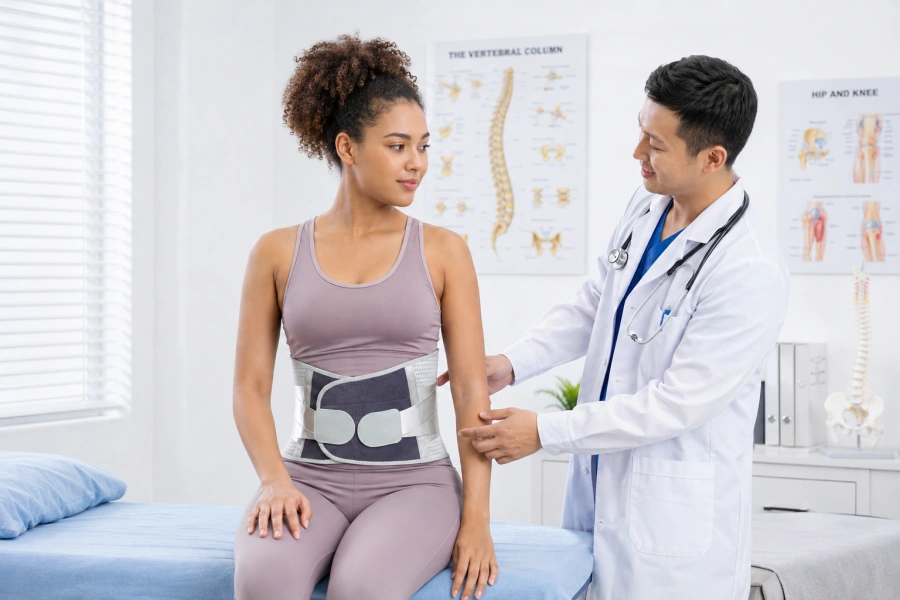
A medical back brace prescribed by your doctor can cost anywhere from $30 to over $2,000. Without the right information, that range feels less like a price guide and more like a guessing game.
You might be recovering from spinal surgery. Or you’re dealing with chronic lower back pain. Maybe you just want to know what Medicare will cover before you spend anything. Either way, the cost of a lumbar support brace is rarely clear-cut.
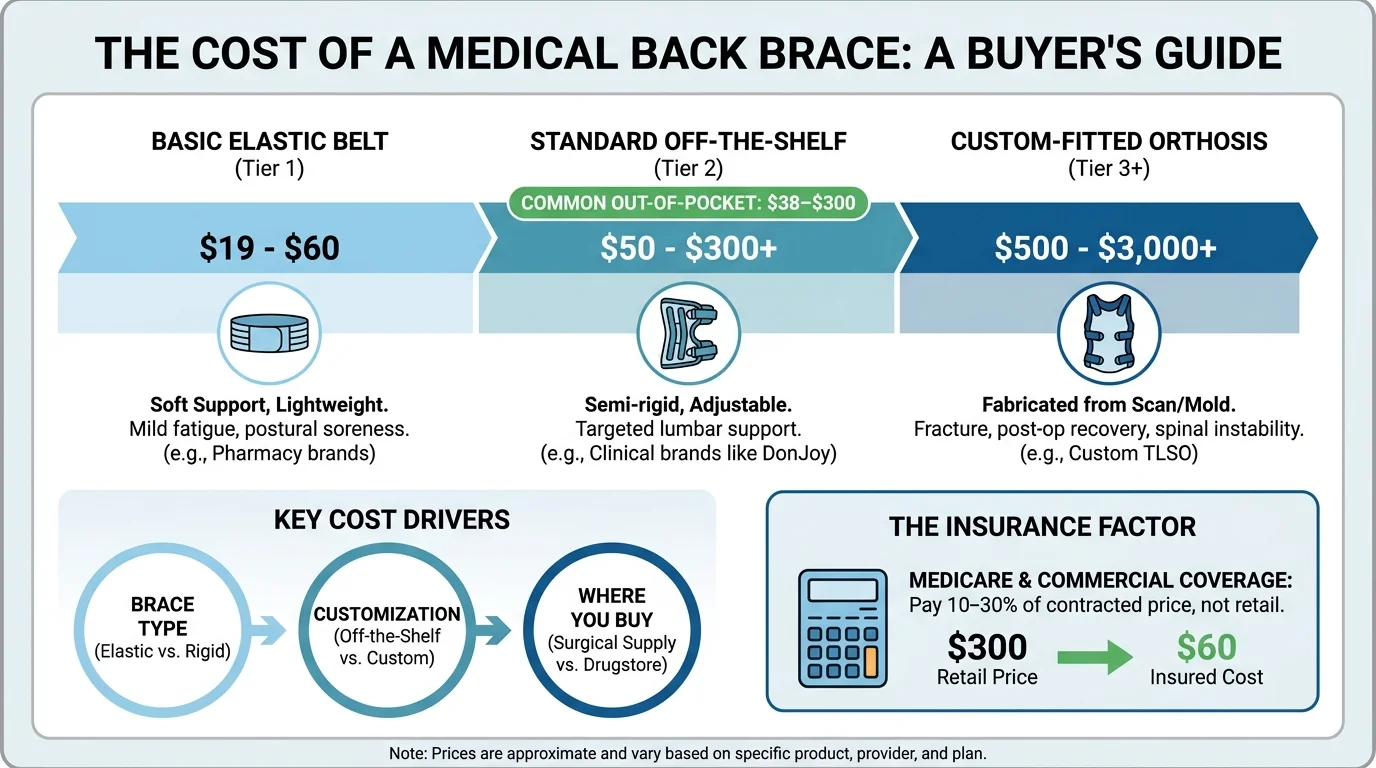
This guide breaks down what you can expect to pay, why prices vary so much, and how to avoid overpaying for the back support you need.
How Much Does a Medical Back Brace Cost?
Most people buying a medical back brace spend between $38 and $300 out of pocket. That range covers most real purchases. Think everything from a basic elastic lumbar belt to a prescribed orthopedic LSO brace.
The full retail range runs wider — $15 on the low end, up to $1,000+ for custom-fitted orthoses. Those extremes are edge cases, though. A $15 Mueller elastic belt at the drugstore sits on one end. A $1,000+ custom TLSO molded to your spine sits on the other.
What moves the price:
Brace type — elastic support belt vs. semi-rigid LSO vs. post-op TLSO
Off-the-shelf vs. custom — ready-made starts around $30. Custom fabrication starts at $500
Where you buy it — clinical brands like Aspen, Exos, and DonJoy run $80–$300. Drugstore brands land at $15–$70
Insurance changes the whole picture. With Medicare or a commercial DME benefit, you pay 10–30% of the contracted price — not the retail tag. A brace listed at $300 might cost you $60.
Medical Back Brace Prices by Type: From Basic Support to Custom-Made
The back brace market starts at a $19 elastic belt from your local pharmacy. It goes all the way up to a $3,000 custom-molded orthosis built from a 3D scan of your spine. Each price point exists for a reason. Pick the right tier for your condition, and you save real money.
Tier 1: Elastic Soft Support Belts — $19 to $60
These are the basics. Stretchy, lightweight, no rigid parts.
Most sell for $19 to $40. Vitality Medical and similar suppliers list standard elastic back belts in the $25–$40 range. No prescription needed; you grab them straight off the shelf.
Good for:
– Mild muscle fatigue
– Desk workers with postural soreness
– Short-duration lifting support
Not built for fractures, post-surgical recovery, or spinal instability.
Tier 2: Standard Off-the-Shelf Orthopedic Braces — $50 to $300
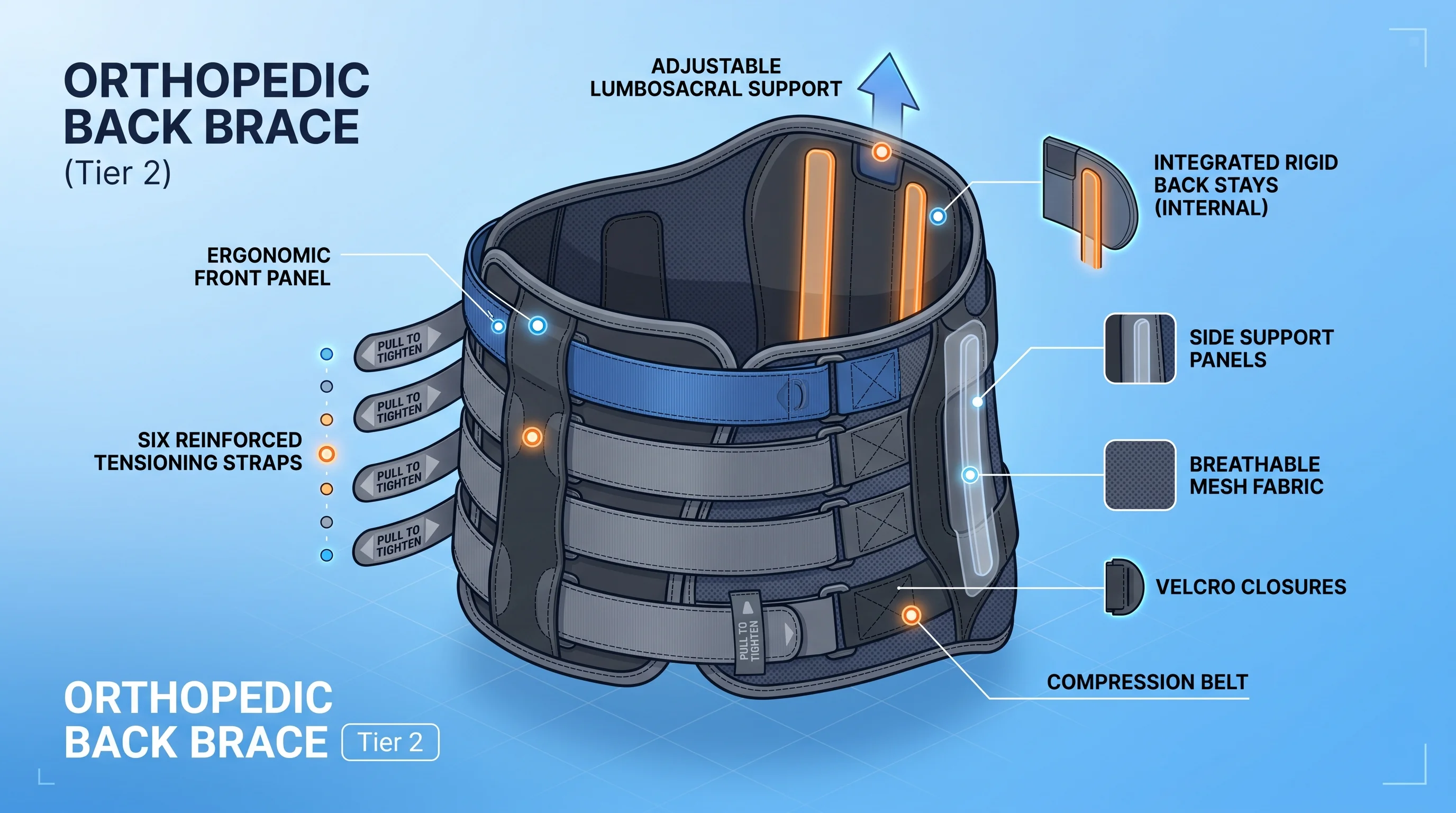
Step up to plastic stays, adjustable tensioning systems, and targeted lumbar panels, and you’re in this category.
DonJoy’s FORM™ II 621 SI Joint Brace retails at $98.26. The full DonJoy back brace line runs $100–$250 for standard models. Breg lands in a close range: $100–$350, depending on the design.
The overall market average for this tier sits at $50–$300. These braces work well for:
– Moderate chronic lower back pain
– Mild disc issues
– Light post-operative support where hard immobilization isn’t needed
Tier 3: Rigid & Prescription-Grade Orthopedic Braces — $150 to $900
Rigid front-and-back panels. Built-in motion restriction. Most need a doctor’s order.
Retail range runs $150–$500. Some specialized models reach up to $900. Doctors prescribe these after lumbar fusion, laminectomy, or vertebral compression fracture. At this level, basic “support” isn’t the goal — controlled immobilization is.
Tier 4: LSO / TLSO Spinal Orthoses — $128 to $2,000+
Prescription-grade support for serious spinal conditions. This tier covers both off-the-shelf and fitted options.
Off-the-shelf LSO and TLSO products cover a broad retail range:
|
Product |
Retail Price |
|---|---|
|
Aspen Horizon™ 627 Lumbar Brace |
$109.99 |
|
Aspen Horizon™ 631 LSO |
$199.99 |
|
Aspen Horizon™ 637 LSO Pro |
$239.99 |
|
Exos FORM™ II 626 Back Brace |
$127.99 |
|
Exos FORM™ II 631 Back Brace |
$227.99 |
|
Exos FORM™ II 637 Back Brace |
$267.99 |
The product itself falls in the $180–$270+ range. Add orthotist fitting, clinical evaluation, and follow-up adjustments, and the total climbs to $800–$2,000+. That’s the real-world number for most LSO/TLSO prescription cases.
Used for:
– Thoracolumbar fractures
– Multi-level spinal instability
– Post-fusion immobilization
– Select spinal deformity cases
Tier 5: Custom-Made Orthoses — $1,000 to $3,000+
Custom fabrication starts with a mold or 3D scan of your body. Materials get chosen for your specific condition. The orthosis gets built from scratch, piece by piece.
Total cost — materials, fabrication, fitting, and follow-up — runs $1,000–$3,000. Severe deformity or multi-segment fusion cases can push beyond that range.
These aren’t retail products. Orthotic practices and hospital spine centers deliver them. Manufacturers like Aspen or Exos often serve as the base platform.
|
Brace Type |
Typical Use |
Price Range |
|---|---|---|
|
Basic soft/elastic lumbar belt |
Mild pain, posture support |
$40–$150 |
|
Standard orthopedic lumbar brace |
Chronic pain, doctor-prescribed |
$100–$350 |
|
Rigid/post-operative brace |
Post-surgery, spinal instability |
$200–$600 |
|
Custom spinal orthosis (TLSO/LSO) |
Scoliosis, complex conditions |
$500–$2,500 |
What Factors Drive the Cost of a Medical Back Brace?
Material and Rigidity
The frame dictates the price. Elastic fabric braces use basic neoprene and polyester. Low material cost, simple construction — $20–$150. Add rigid plastic stays and lumbar panels, and you’re in the $150–$700 range. Step up to titanium, cobalt-chrome, or engineering-grade polymer shells — the kind used in TLSO orthoses — and costs climb to $180–$2,700+.
It’s not just the material price either. Rigid structures need complex assembly. They require higher-tolerance manufacturing and stricter compliance testing. That all adds up.
Off-the-Shelf vs. Custom-Fitted vs. Custom-Made
Prefab braces in standard S/M/L sizes run $40–$300
Custom-fitted options land at $200–$800
Custom-made orthoses, built from a personal mold or 3D scan, start at $500. For complex spinal cases, that number climbs fast
Condition Severity
The brace has to match what your spine actually needs. Here’s a simple breakdown:
Mild postural pain → soft brace → $20–$150
Moderate chronic degeneration → semi-rigid support → $150–$700
Post-surgical fixation or spinal deformity → rigid or custom TLSO → several hundred to several thousand dollars
Buy too little support here, and you risk poor stabilization. That can mean re-injury, repeated purchases, or a second surgery. A $50 brace chosen for a post-fusion case does not stay a $50 decision.
Brand Certification and Clinical Validation
Certified lower back brace manufacturer put money into FDA listing, CE certification, clinical testing, and higher-grade breathable materials. That investment shows up in the price — $100–$350 for standard models.
Generic alternatives look cheaper upfront. But they often skip the durability and compliance standards that medical-grade use demands. You may end up paying more in the long run.
Coverage Area and Feature Complexity
More coverage means a higher price tag:
Lumbar-only braces: $50–$300
Multi-segment TLSO designs covering thoracic and lumbar regions: $180–$2,700+
Add heating modules, electronic tension adjustment, or custom ventilation panels, and the price climbs further.
Purchase Channel
Where you buy matters as much as what you buy:
Online and direct-to-consumer channels account for 35–45% of back brace retail revenue. Prices are lower here, and competition keeps them that way.
DME suppliers and orthotists charge $200–$800+. That covers professional fitting, follow-up visits, and insurance billing support.
Hospital-based orthotic programs bundle imaging, evaluation, and multi-visit adjustments into the total. That combined cost often exceeds the brace price itself.
Does Insurance Cover Medical Back Braces? (Medicare, Medicaid & Private Plans)
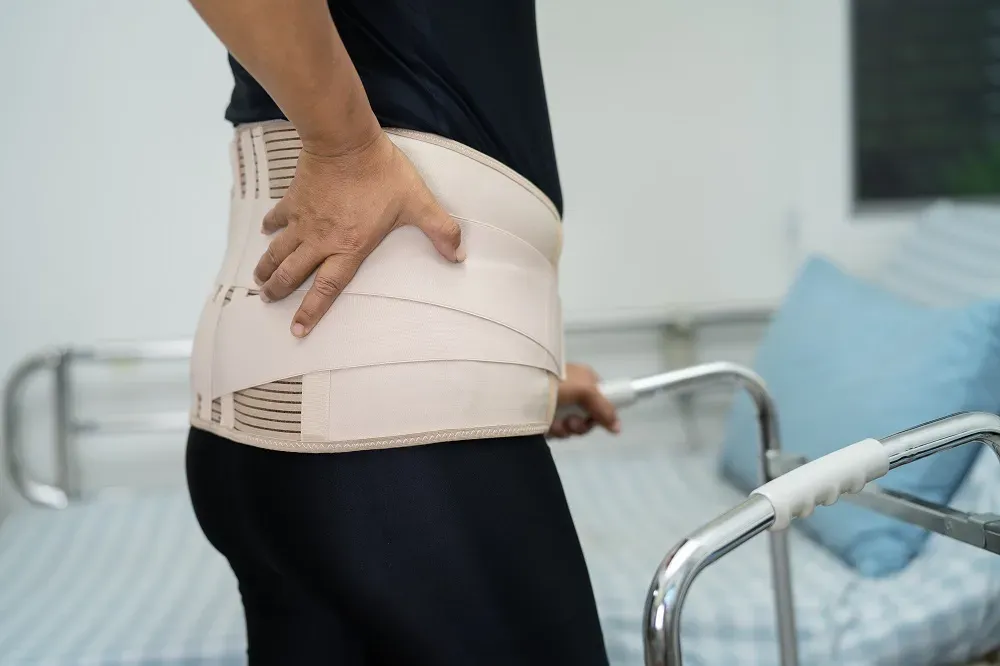
Here’s the short answer: yes, insurance can cover a medical back brace — but only under specific conditions.
Back braces fall under Durable Medical Equipment (DME) in U.S. insurance rules (42 CFR §410.36). That classification opens the door to coverage. It also comes with a checklist. Miss one item, and your claim gets denied.
Four conditions that apply to almost every plan:
A written prescription from an enrolled physician, with a clear diagnosis
Documented medical necessity — the brace must restrict movement, support an unstable spine, or help with post-surgical healing
The brace must be rigid or semi-rigid and built to last at least three years
Purchased from an approved, in-network DME supplier
Soft elastic belts often don’t qualify. They fail the rigidity standard and insurers won’t cover them.
Medicare Part B
Medicare covers lumbosacral orthoses under its Part B DME orthotics benefit. Here’s how the cost breaks down: you pay your annual Part B deductible ($283 in 2026), then Medicare covers 80% of the approved amount. You pay the remaining 20% coinsurance.
On a $500 rigid brace, that comes to about $100 out of pocket — after the deductible. A second brace approved within the same year? The deductible doesn’t reset. The 20% still applies.
Medicare Advantage (Part C) follows the same medical necessity rules. Some plans swap the percentage structure for fixed copays instead.
Medicaid
Coverage exists in most states, but the rules vary by location. Plan on prior authorization for custom or higher-cost braces. Most adults pay $0–$10 per DME item, or 0–20% coinsurance depending on the state. Children and dual-eligible beneficiaries often pay nothing at all.
Private Insurance
Most employer PPO and HMO plans match Medicare’s structure: 20% coinsurance after your DME deductible. Some plans use fixed copays of $25–$75 instead. High-deductible plans work differently — you pay the full cost up front until you hit your deductible. After that, 10–30% coinsurance kicks in.
Custom braces need pre-authorization in most cases. Off-the-shelf models clear approval faster.
How to Get Your Brace Covered: A Simple Workflow
See an in-network doctor. Get a detailed prescription: diagnosis code, brace type, and expected duration.
Verify your DME supplier. Check your plan’s directory. Confirm they accept assignment or full network participation.
Check pre-authorization requirements before ordering — this matters most for custom or TLSO-level braces.
Let the supplier submit the claim. They file the HCPCS-coded claim straight to your insurer with all supporting documentation.
Keep everything. Hold onto your prescription, Explanation of Benefits (EOB), and invoice. You’ll need them for any replacement claim down the road.
Coverage won’t zero out your cost. But a $600 rigid brace covered under Medicare or a solid commercial plan can drop to $120 or less out of pocket. That’s the number worth planning around.
Custom vs. Off-the-Shelf Back Brace: Which Is Worth the Price?
The right answer comes down to what your spine needs.
Off-the-shelf braces come in S/M/L and adjust with straps. For mild muscle strain, postural fatigue, or short-term lifting support, that’s enough. A standard orthopedic lumbar brace runs $100–$350. A basic OTC belt costs $20–$60. These handle everyday pain well. They’re the right call for most people.
Custom-fitted and custom-made braces solve a different category of problem.
Here’s where each option makes sense:
|
Option |
Price Range |
Best For |
|---|---|---|
|
Off-the-shelf (OTC) |
$50–$300 |
Mild-moderate pain, short-term recovery |
|
Custom-fitted (TLSO/LSO) |
$500–$2,500 |
Post-surgical fixation, moderate scoliosis, complex body types |
|
Custom-made |
$2,000–$10,000+ |
Severe scoliosis, structural deformity, pediatric cases |
Off-the-shelf is the smarter buy for: Mild disc issues, muscle strain, posture correction, and athletic support. None of these need precision engineering. An OTC brace handles them without the extra cost.
Custom is non-negotiable for: Post-fusion recovery, progressing scoliosis, vertebral compression fractures, and non-standard body types. These conditions need controlled immobilization. Standard sizes can’t deliver that. A bad-fitting off-the-shelf scoliosis brace doesn’t just fall short — it can press on the wrong vertebral segment and make the curve worse.
The middle ground worth considering is custom-fitted — a standard shell that a professional adjusts through measurement, trimming, and padding. Most prescription TLSO braces fall into this category. Medicare classifies and reimburses them in a separate category from both OTC and custom-made options. That distinction reflects real clinical value.
Bottom line: Match the brace to the diagnosis. For mild conditions, $100–$200 is plenty. For post-surgical or structural cases, the $800–$2,500 custom-fitted range is where the clinical outcomes justify the cost.
Buying Online vs. Through a Doctor or DME Supplier: Price & Coverage Impact
Amazon and other online retailers price identical branded back braces 5–15% lower than specialized DME suppliers. You get more options, faster shipping, and no waiting room. For self-pay shoppers, that’s a real advantage.
But for anyone with insurance, the math flips.
Your doctor writes a prescription. You buy through an enrolled DME supplier. Medicare then covers 80% of the approved amount. You pay 20% coinsurance — on the approved amount, not the retail sticker. A brace with a $300 list price might carry a $200 Medicare-approved amount. Your share: $40. That same brace on Amazon costs $255 out of pocket.
The rule is simple: Your coinsurance share is less than the online price. The insured DME route wins. For any brace over $100, it almost always does.
Quick decision guide:
Have Medicare or DME coverage? → Get the prescription. Use an in-network DME supplier. Ask for the HCPCS code and your exact coinsurance amount before ordering.
No insurance / self-pay? → Shop online. Add up the total cost — shipping and accessories included. Check brand sites for seasonal discounts. Savings of 10–30% off retail are common.
How to Get a Medical Back Brace for Less: 4 Ways to Reduce Your Cost
1. Ask for a Cash-Pay or Self-Pay Discount
Hospitals and DME suppliers often give uninsured patients 30–45% off billed charges. St. Joseph Hospital in Orange, CA goes even further. They offer 45% off for uninsured patients. Pay within 10 days and you get an extra 10% off. A $600 brace billed there can drop to under $300.
Ask these questions before you pay anything:
– “Do you offer a self-pay or cash discount on DME?”
– “Is there an early-payment incentive?”
– “Can I get an itemized written estimate with the self-pay price included?”
2. Pay Through FSA or HSA
Pre-tax dollars go further than most people think. At a combined 27% federal and state tax rate, a $300 brace paid through an FSA or HSA costs you $219. That’s $81 saved.
Most prescribed orthopedic braces qualify. Check with your FSA/HSA administrator before you buy. Also, keep your itemized receipt after purchase.
3. Maximize Your Insurance Coverage
With Medicare Part B, your 20% coinsurance is based on the approved amount. A brace Medicare values at $400 costs you $80. For higher-tier medical-grade braces, Medicare’s approved payment runs $1,680–$2,388. At 20% coinsurance, your share falls between $336 and $478.
No insurance and low income? Hospital financial counseling departments can point you toward sliding-scale or charity care programs. Groups like the Align Scoliosis Foundation and Brace for Impact offer partial or full brace funding for patients who qualify.
4. Buy Smart
For mild support needs, a $50–$150 off-the-shelf option is enough. For post-surgical or structural cases, look at a well-fitted $150–$300 brace from a reputable supplier. Seasonal sales often take 10–30% off. That gives you far better long-term value than the cheapest option on the shelf.
Which Medical Back Brace Is Right for Your Condition and Budget?
|
Condition |
Brace Type |
Support Level |
Price Range |
Insurance |
|---|---|---|---|---|
|
Postural pain / mild strain |
Soft elastic belt |
Light |
$20–$80 |
Self-pay |
|
Herniated disc / sciatica |
Semi-rigid LSO |
Moderate |
$60–$200 |
DME-eligible |
|
Post-surgical / compression fracture |
Rigid LSO/TLSO |
High (50–65% motion restriction) |
$200–$800 |
~80% covered |
|
Severe deformity / custom cases |
Custom TLSO |
Maximum |
$1,000+ |
Requires prior auth |
Three questions cut straight through the confusion:
What’s your diagnosis? Postural soreness needs a $25–$40 elastic belt. A herniated disc with sciatica needs a semi-rigid LSO. That means abdominal compression panels and vertical stays. Budget $60–$200 for that range. A confirmed compression fracture or post-fusion recovery needs a rigid LSO or TLSO. It restricts motion by 50–65%. Your surgeon prescribes it. Prices start at $200.
Do you have a prescription? Your doctor may have documented a structural diagnosis. Ask them directly: “Can you write a DME prescription for a back brace?” That one document opens the door to insurance reimbursement — often 80% of the approved amount under Medicare.
What’s your realistic budget? Under $50 covers posture support and mild muscle fatigue. $80–$150 gets you a medical-grade semi-rigid LSO. That’s comparable support to a $300+ hospital-prescribed brace at about half the cost. Over $200 with a prescription? Go through an in-network DME supplier and let insurance carry most of it.
Match the brace to the diagnosis. Then find the best price within that tier.
Conclusion
The price tag on a medical back brace doesn’t have to feel like a burden. Recovering from surgery? Managing chronic back pain? Just trying to get through a long, hard day? The right brace exists at a price that works for you.
Off-the-shelf LSO back braces start as low as $30. Custom TLSO braces can reach $2,500. But with Medicare coverage, FSA/HSA dollars, or a bit of smart online comparison shopping, your final out-of-pocket cost is often significantly lower than the retail sticker price.
Don’t let cost be the reason you go without the support your spine needs.
Browse AOFit’s physician-recommended lumbar support braces. AOFIT meets prescription-grade standards and comes at prices most people can manage. Your back carries you through everything. It’s worth taking care of.