
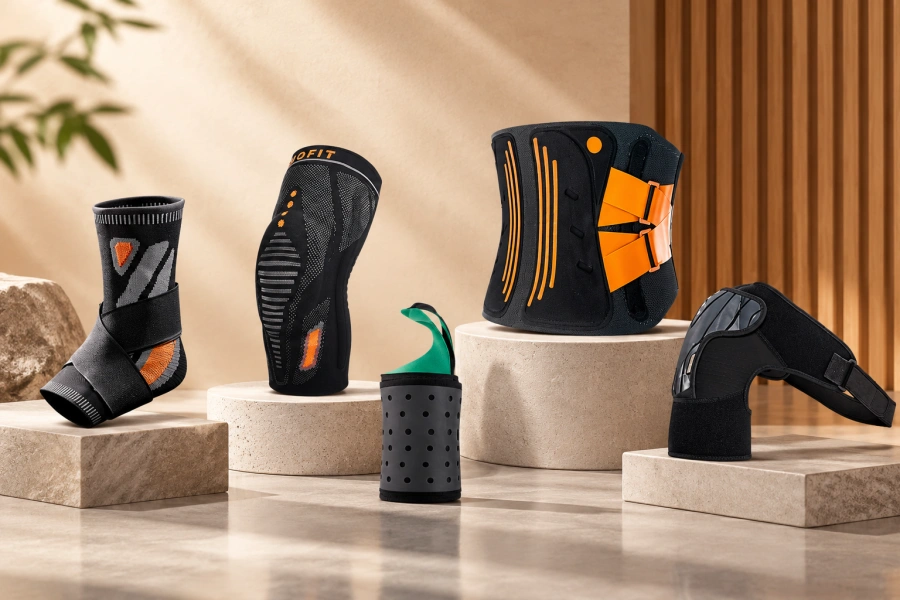
When a procurement team equips a clinic with dozens of knee supports, or a hospital stocks back braces for post-surgical patients, the decision comes down to cost control, patient outcomes, and long-term value alongside patient comfort. Prefabricated braces offer speed and lower upfront costs, while custom braces typically deliver better compliance and fewer returns for complex cases. Which option fits your budget, patient population, or product line? This guide compares fabrication processes, fitting requirements, and cost structures side by side, so you can match the right brace to each use case without guessing or overpaying.
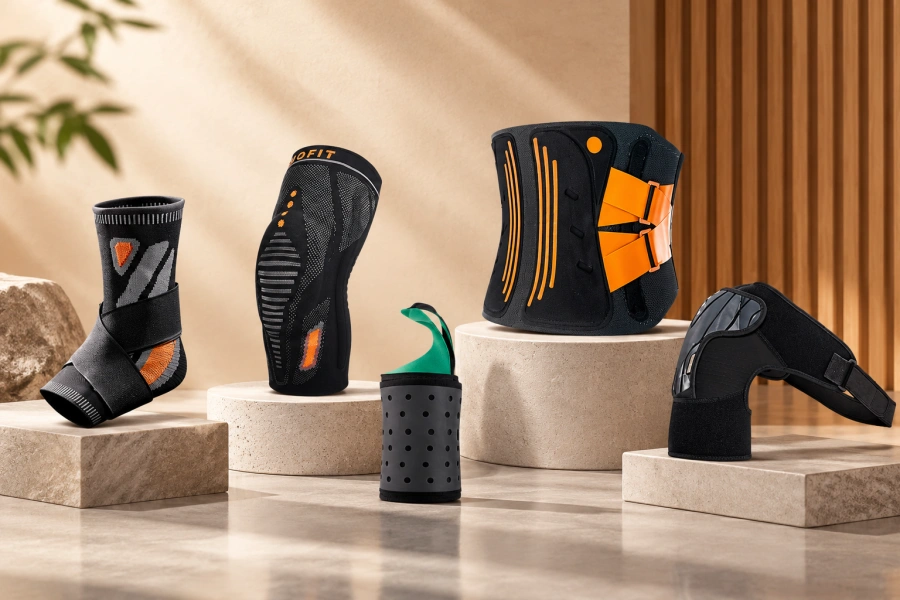
Custom Braces: Definition, Fabrication Process & Core Features
People often mix up two distinct categories in orthotics. A custom-fabricated brace is built from scratch for a single patient using scans, casts, molds, or imaging, and no one else can wear it. A custom-fitted brace starts as a prefabricated, off-the-shelf product that gets trimmed, heat-molded, or adjusted for fit. A knee brace becomes custom-made when it requires an impression or mold rather than a tape measurement against a size chart.
How a Custom Brace Gets Made
The process runs through five stages:
Clinical assessment: Diagnosis, joint stability, range of motion, limb circumference, gait, and activity level are all documented.
Scan, cast, or impression: Technicians capture the limb or torso, then rectify the shape to account for pressure zones and joint axes.
Design and production: CAD/CAM modeling converts that data into thermoplastic, carbon-fiber, or hybrid materials.
Quality checks: Dimensions, hinge alignment, and padding are verified against the original scan.
Fit testing: Walks, climbs stairs, or performs target movements before final adjustments ship.
Who Actually Needs Custom Braces?
Custom braces are built for B2B partners managing complex or high-performance cases—orthopedic clinics, pediatric orthopedics, sports medicine centers, O&P providers, rehab centers, and elite athletic teams. They are the strongest fit for severe joint instability, skin sensitivity, pediatric growth, irregular anatomy, or repetitive-load applications requiring zero migration.
Off-The-Shelf Braces: Definition, Manufacturing & Core Features
Walk into almost any pharmacy or urgent-care clinic, and the brace on the shelf was probably made months ago in a batch of hundreds, built for nobody in particular. The off-the-shelf (OTS) model relies on prefabricated braces mass-produced in standard sizes (typically XS through XXL) and sold using a sizing chart instead of a mold. A knee-brace line, for example, might cover knee circumferences from 33 to 75 cm depending on the manufacturer.
Manufacturing runs on repeatable patterns:
– Neoprene, elastic knit, or breathable textiles
– Thermoplastic or composite shells
– Aluminum or polymer hinges and stays
– Hook-and-loop straps, buckles, lace closures
– Foam or silicone padding for positioning
This repeatability keeps unit costs low and replacement stock predictable.
Common categories:
– Knee: sleeves, patellar-control, hinged functional, unloader braces
– Wrist/hand: volar, cock-up, thumb-spica supports
– Ankle: lace-up, stirrup, prefabricated AFOs
– Back: lumbar supports, abdominal binders, SI belts
Adjustment is limited to:
– Strap tightening or repositioning
– Pad repositioning
– Minor trimming or bending
Once fitting requires molding or structural alteration, the device stops being true OTS and becomes custom-fitted.
|
Feature |
Off-the-shelf brace |
|---|---|
|
Production |
Batch, standardized |
|
Sizing |
Fixed range (XS–XXL) |
|
Delivery |
Immediate/short lead time |
|
Best fit |
Common anatomy, acute or short-term use |
|
Cost/inventory |
Easy to stock and replace |
Custom Braces Vs. Off-The-Shelf Braces: Comparison Table
|
Dimension |
Custom Braces |
Off-The-Shelf Braces |
|---|---|---|
|
Fit |
Multi-point measurements or cast molds fit irregular limbs, deformities, or low muscle mass. |
Standard sizing fits typical limb proportions |
|
Adjustment |
Individualized joint axis alignment and offloading direction |
Straps, hinges, and cross-fixation bands |
|
Clinical Use |
Complex deformities, post-surgical cases, and biomechanical issues standard braces cannot stabilize. |
Knee instability, mild-to-moderate osteoarthritis, patellar support, and routine post-op recovery |
|
Availability |
Days to weeks for clinical assessment, fabrication, and final fitting |
Immediate pickup or fast warehouse shipping |
|
Cost |
Higher total cost, often billed in separate line items for measurement, fabrication, and fitting |
$15–$140 depending on the product tier |
|
Comfort |
Relieves local pressure points and prevents brace migration, though rigid frames add weight |
Lightweight sleeves feel comfortable all day, while hinged or unloader frames can trap heat. |
|
Durability |
Duty-duty hinges and rigid composite frames support long-term, high-load use |
Quickly depend on fabric weight and strap quality; basic knit sleeves wear out quickly |
|
Transferability |
Molded to an individual patient, with zero resale or reassignment value |
Standard inventory can be restocked, transferred, or reassigned across clinics |
|
Insurance |
Covered when documented physical deformity or sizing limits rule out prefabricated options |
Meets standard payer medical policy; payers routinely deny add-on fees for custom upgr.ades |
Pricing Snapshot Across Product Tiers
|
Product Type |
Example |
Price |
|---|---|---|
|
Basic elastic sleeve |
$15.49 | |
|
Open patella brace |
Neo G Open Patella |
$28.99 |
|
Adjustable hinged brace |
Mueller Model 6455 |
$32.99 |
|
Mid-tier sport hinge |
~$79.99 | |
|
Premium sport brace |
DonJoy Drytex Sport Hinged |
$105.99 |
|
OA unloader brace |
BraceAbility OA Unloader |
$139.99 |
|
Advanced functional brace |
DonJoy Bionic FullStop |
$219.99 |
|
Custom brace |
Clinic measurement + fabrication |
Priced per prescription, not retail-listed |
Procurement takeaway: Stock off-the-shelf hinged and unloader models when you need fast turnaround times, lower unit costs, and reusable inventory. Send patients for custom fitting only when severe limb deformity, persistent brace slippage, or specific surgical protocols make standard sizes unusable.
When Custom Sports Braces Are the Better Choice?

Five criteria separate a sports program that needs custom braces from one overspending on inventory. Procurement teams at athletic departments, sports medicine clinics, and physical therapy networks should check every custom brace request against this list before approving the purchase order.
1. Fit failure comes first. Off-the-shelf sizing breaks down when thigh or calf measurements fall outside standard charts, limb proportions are asymmetrical, or low muscle mass leaves no suspension surface. A wasted-away quadriceps or calf will not hold a prefabricated knee brace in place during a sprint.
2. Long-term wear is the second filter. Athletes facing months of continuous use need more than a brace that simply fastens around a limb. Pressure distribution, skin tolerance, and brace migration under repetitive loads matter far more than initial comfort.
3. Recurrence risk matters. Recurrent ankle sprains, stress fractures, and chronic tendinitis signal that temporary compression is not fixing the biomechanical issue. These cases demand individualized support built around the athlete’s gait, foot structure, and sport-specific movements.
4. Directional control is the fourth factor. A custom knee brace lets technicians position hinges around a genu varum or valgus axis instead of forcing a standard frame onto an irregular joint. Custom wrist orthoses can restrict flexion or extension while preserving grip for racquet and ball sports.
5. Equipment compatibility seals the decision. Cleats, ski boots, skates, and compression uniforms all restrict brace bulk. High-load sports—soccer, basketball, skiing, football, tennis, weightlifting—demand that low-profile custom fit.
Every custom order should start with a clinical evaluation documenting functional limitations, expected duration of use, and why standard sizes failed. Payers require that documentation before covering custom-fit braces over off-the-shelf alternatives.
When Off-The-Shelf Braces Are the Practical Option?
A thoracolumbosacral brace costs $1,352.41 off-the-shelf versus $3,719.53 custom-made. That is a 2.75x markup for devices treating the same spinal fracture protocol. For procurement teams tracking cost-per-patient outcomes, identifying when that price difference makes clinical sense is essential.
Prefabricated braces fit clinical needs when three conditions align:
No structural anomaly: Limb proportions fit standard sizing charts, with no bony prominence or severe swelling.
Short-term or intermittent use: Indications include grade 1 or grade 2 ankle sprains, post-workout knee instability, or wrist strain from repetitive keyboard work.
Immediate availability: Patients require same-day fitting, travel before competition, or temporary support before a full clinical evaluation.
Clinical guidelines support prefabricated models across routine indications. Standard protocols list semi-rigid ankle braces as first-line treatment for grade 1 and grade 2 sprains alongside rehab exercises. Carpal tunnel protocols call for neutral-position wrist splints worn for four consecutive weeks, requiring no custom molding.
Direct cost comparisons show a similar pattern. A single-hinge unloader knee brace bills at $849 off-the-shelf versus $1,780 custom. In one functional knee brace study, custom models (~$1,200) displaced 18.6mm after an hour of activity, whereas prefabricated versions (~$600) displaced 4.5mm. Researchers recommended the lower-cost option.
Custom devices remain necessary in specific scenarios: standard sizing fails to stabilize the joint, a varus or valgus deformity exists, repeated brace slippage compromises protection, or a physician prescribes precise angle control. Outside those clinical indications, stocking off-the-shelf inventory delivers comparable patient outcomes at a fraction of the cost.
How to Decide: A Step-By-Step Brace Selection Checklist
Six checkpoints stand between a purchase order and a brace that fits properly. Skip one, and you end up with returns, re-fittings, or a patient who stops wearing the device altogether. Procurement teams sourcing knee, ankle, back, or wrist support should run every custom brace or off-the-shelf order through this sequence before signing off.
1. Define the clinical scenario. Document the body region, treatment goal (immobilization, offloading, correction, post-op protection, or sport protection), and wear intensity across daily, occupational, or athletic settings. Note the patient’s body type, activity level, footwear or clothing compatibility, and any history of brace failure. A thorough assessment covers medical history, functional goals, joint range of motion, strength, and gait.
2. Pick the brace category. Standard off-the-shelf sizing handles common body types and low-complexity cases with fast turnaround. Semi-custom options add adjustable hinges, padding, or straps to a prefabricated shell. Choose full custom builds for visible deformities, complex post-surgical cases, spinal or long-leg orthoses, and patients who need precise pressure distribution. When requesting quotes, ask vendors to specify diagnosis fit, left/right availability, size ranges, adjustability, materials, hinge structure, lead time, and repair policies.
3. Verify measurement and data capture. Standard records should log key dimensions, joint axes, range of motion, pressure points, and skin condition. Custom builds rely on cast molds, 3D scans, or laser imaging to determine final shape, alignment, and fit. Require suppliers to provide measurement sheets, scan file naming conventions, left/right labeling, and data verification logs.
4. Screen materials and structure. Evaluate rigidity, weight, breathability, sweat resistance, washability, edge softness, and material fatigue over time. For hinged products, verify range of motion, locking mechanisms, and axis alignment tolerances. For soft braces, check compression grade, rebound, hook-and-loop lifespan, and strap replaceability. Sample testing should measure donning and doffing time, slippage, skin marks, displacement during movement, and shrinkage or stretching after washing.
5. Audit compliance and supplier capability. Require clear product labeling, instructions for use, batch tracking, material documentation, and quality inspection records. Confirm the supplier can handle custom modifications, rapid rework, dedicated left/right production, replacement padding and straps, and clinical staff training. Quotes should break down mold and scan fees, unit prices, sample costs, alteration fees, packaging, shipping, and MOQs. Custom fabrication typically takes 1 to 4 weeks.
6. Treat final fitting as the release gate. Check contact points for gaps, hot spots, pinching edges, or over-tight straps. Have the wearer sit, stand, walk, climb stairs, grip, or run through target movements while you watch for migration. Adjust straps, hinges, padding, and edges on the spot. Walk the patient through daily wear, cleaning, and strap adjustments. Release the brace only if it feels comfortable, meets the prescribed function, presents no skin risks, and works with the patient’s regular clothing and footwear.
Fabrication Timeline: What Procurement Should Expect
|
Stage |
Typical Duration |
Key Checkpoint |
|---|---|---|
|
1. Prescription & initial assessment |
20–60 min |
Confirm diagnosis, goals, activity context, contraindications, and prior brace failures; complex spinal or long-leg cases take longer |
|
2. Measurement, casting, or 3D scanning |
Same day as assessment |
Verify left/right orientation, joint axes, pressure zones, range of motion, and footwear/clothing fit; archive traceable data |
|
3. Design & engineering review |
Several days |
Confirm material, thickness, hinges, locking angle, strap placement, edge finishing, and adjustability; complexity drives final lead time |
|
4. Manufacturing & QC |
~1–4 weeks |
Check dimensions, alignment, hinge motion, surface burrs, padding adhesion, strap strength, and left/right labeling; custom cases cite 1–3 or 2–4 weeks |
|
5. First fitting/delivery |
30–120 min after fabrication |
Check comfort, function, pressure points, slippage, and footwear fit; make minor adjustments on-site |
|
6. Adaptation period |
First week to 2 weeks |
Gradually increase wear time; monitor redness, numbness, pain, swelling, and functional gains |
|
7. First follow-up |
1–3 weeks post-delivery |
Adjust straps, padding, edges, and hinges; confirm real-world work or sport performance |
|
8. Functional review |
~1 month, then every 3–6 months |
Check wear, deformation, skin condition, body changes, and prescription goals; rework or rebuild if needed. |
Region-Specific Checks Worth Flagging
Knee braces: Align the hinge axis with the knee’s anatomical axis to prevent slippage or shear during flexion and extension. Check thigh and calf taper, patellar opening, popliteal space, and edge pressure at the top and bottom. For athletic braces, test slippage during running, jumping, and cutting, both dry and under sweat.
Ankle braces: Distinguish between inversion/eversion control, plantarflexion stops, and Achilles protection; left and right shells are not interchangeable. Verify shoe clearance, malleolar relief, arch support, and heel-lock security.
Back braces: Focus on torso length, pelvic position, spinal curvature, pressure distribution, and seated compatibility. Confirm fit in car seats, office chairs, regular clothes, and sleep positions. TLSO braces need tighter alignment checks and longer fitting sessions.
Wrist braces: Prioritize neutral wrist angle, full thumb and finger clearance, palmar edge contour, and grip function. Test typing, gripping, and forearm rotation during fitting, checking closely for redness, pinching, or strap constriction.
Conclusion
Choosing between custom braces and off-the-shelf braces comes down to matching each case to the patient’s anatomy and your budget. Off-the-shelf braces make sense for speed and low cost during short-term recovery with standard body types. Custom braces earn their price tag when patients require an exact fit, long-term compliance, or complex biomechanical support, where an improper fit can derail a treatment plan.
For clinics and hospitals managing inventory, the priority is balancing patient volume against the cost of a poor fit. You need to know how many patients require precision, and what a failed outcome costs your practice. Handling both groups takes a reliable fitting workflow and a manufacturing partner that can deliver both options.
To build a smarter brace program for your facility, talk to a professional braces and supports manufacturer about custom and prefabricated solutions that fit your bottom line.