
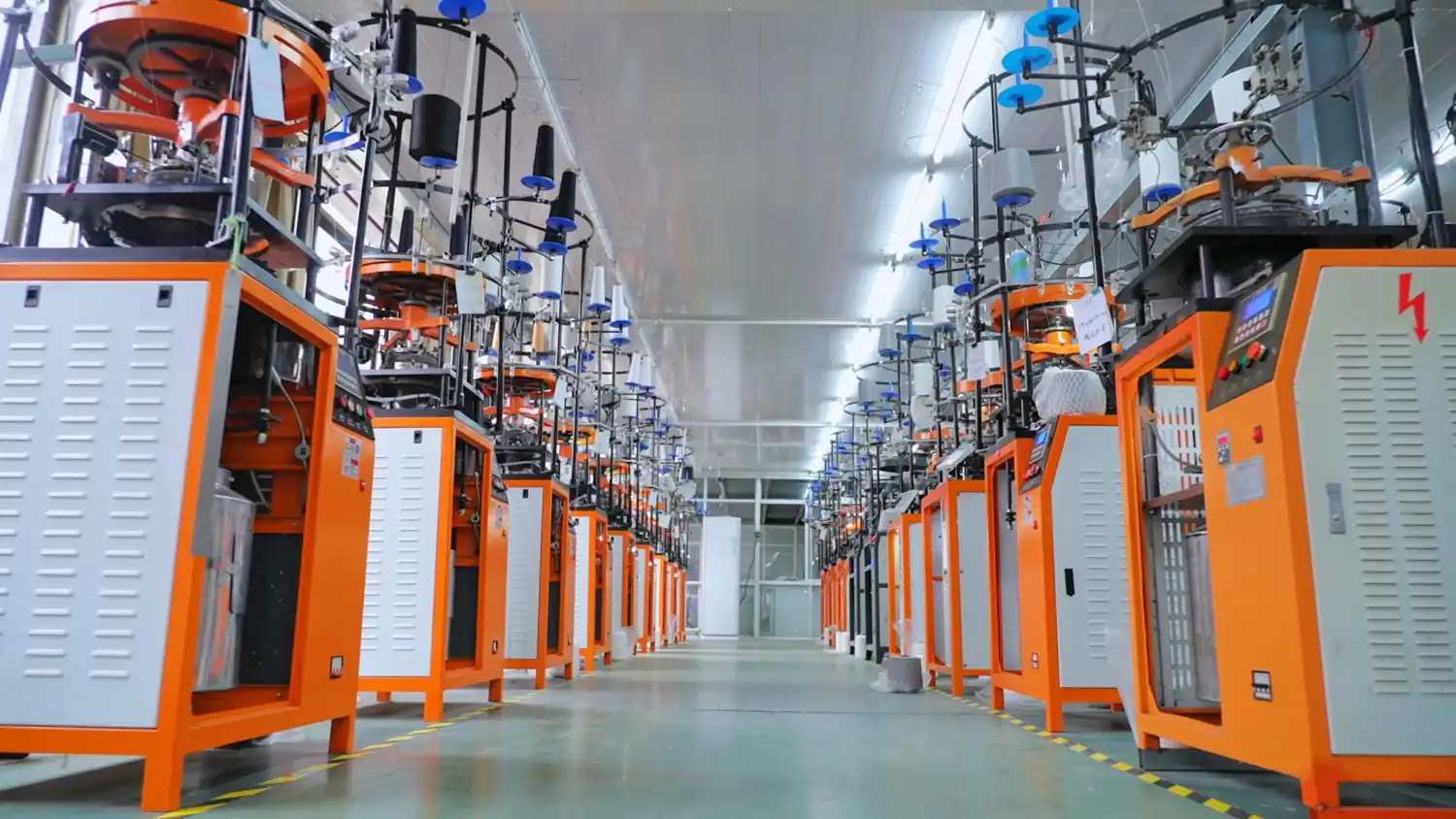
The sports medical brace market is growing fast, and smart entrepreneurs are building brands around custom ankle braces. Launching a custom ankle brace line is less complicated and less expensive than most people think.
A good OEM ankle brace supplier delivers on quality and deadlines, with MOQs that keep your budget intact. You get a scalable, profitable private label business ready for Amazon, retail, or DTC.
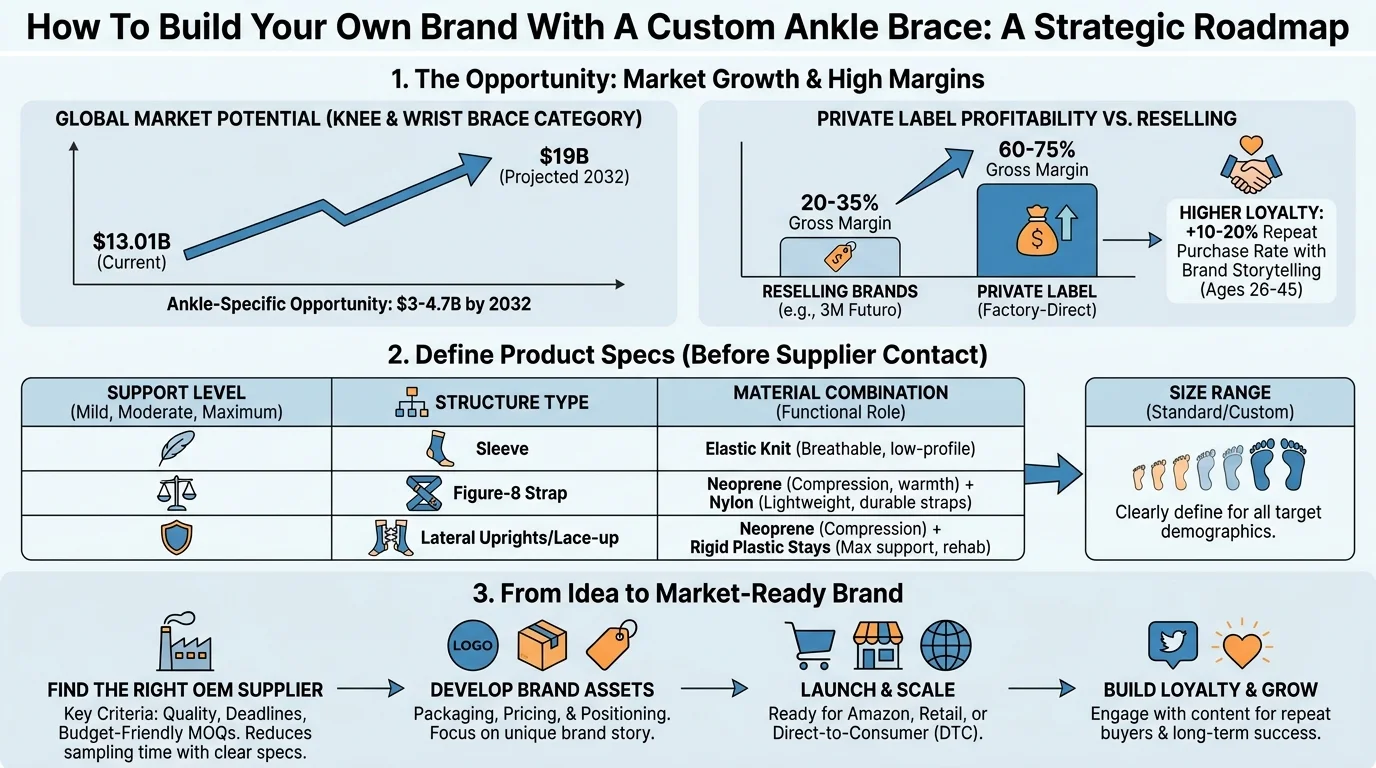
I’ll walk you through how to go from an idea to a market-ready brand, covering everything from picking a custom ankle brace manufacturer to packaging, pricing, and positioning.
Why Build Your Own Ankle Brace Brand?
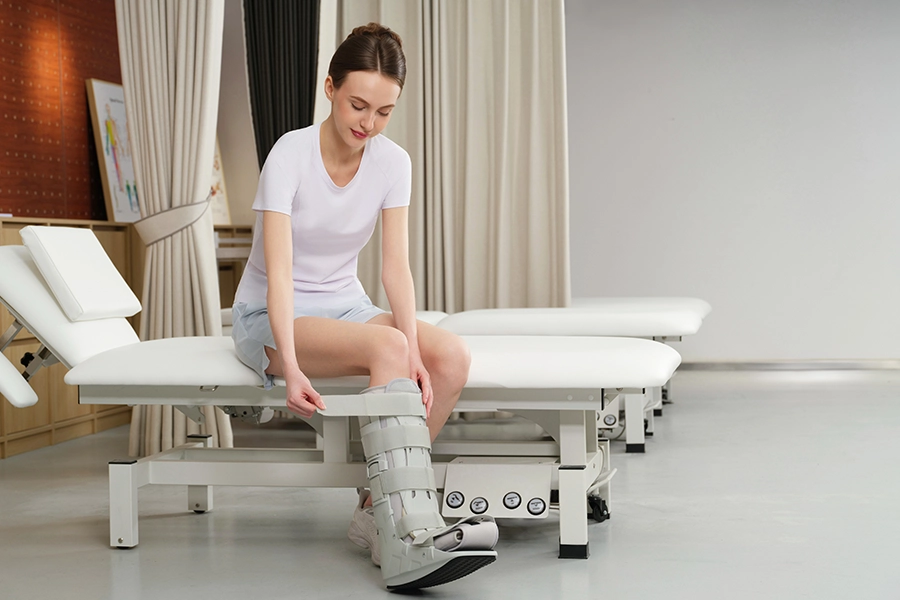
Joint support braces in China posted ¥446.18 million in sales over the trailing 12 months, growing 14.31% YoY, with a 68.96% spike in the last quarter alone. Globally, the knee-and-wrist brace category sits at $13.01 billion and is projected to hit $19 billion by 2032. Ankle-specific braces likely capture 15-25% of that, putting the addressable opportunity between $3-4.7 billion by 2032.
Margins matter more than market size. Reselling brands like Ottobock or 3M Futuro caps your margin at 20-35%. You’re stuck with their pricing, their promotions, their rules.
Private label changes the math. Factory-direct pricing typically runs 25-40% of retail, so brands keep 60-75% of the sale price to work with. Established ankle brace private label sellers in ecommerce regularly hit 50-65% gross margins, nearly double what pure distributors see.
Loyalty adds another layer. Buyers aged 26-45 dominate this category and respond to brand storytelling over generic products. Custom logo ankle support brands that build content on social platforms see repeat purchase rates climb 10-20 percentage points, something impossible when you’re just reselling someone else’s SKU.
Define Your Product Specs Before Contacting a Custom Ankle Brace Supplier
Vague briefs kill deals before they start. Walk into supplier conversations with four locked-down specs, and you’ll cut sampling time in half: support level (mild, moderate, or maximum), structure type (sleeve, figure-8 strap, lateral uprights, or lace-up), material combination, and size range. That’s the language every ankle support brand development project speaks.
Match Materials to Structure
Each material serves a specific job:
Neoprene: best for compression and warmth, ideal for recovery and mild-to-moderate sprains
Nylon: lightweight and abrasion-resistant, used for straps and outer shells
Elastic knit: breathable and low-profile, perfect for mild compression sleeves
Rigid plastic stays: necessary for maximum support and post-injury rehab products
Hand your compression ankle brace factory a simple rule. Mild means a knit sleeve, moderate means a sleeve plus figure-8 strap, and maximum means a lace-up with lateral stays and reinforced strapping.
Lock Down Hard Numbers
Your spec sheet needs measurement points (ankle bone circumference, arch, instep), closure width, stay count per side, and target thickness.
Fix Sizing With Two Data Points
Require ankle circumference ranges (18- 21 cm, 21- 24 cm, etc.) paired with shoe size charts, plus a ±0.5-1.0cm tolerance. Ask for physical sample measurements, not theoretical charts.
Sample RFQ line: “Moderate support, elastic knit body with figure-8 strap and lateral stays. Provide S-XL ankle circumference chart with EU/US shoe size mapping. Quote neoprene and knit versions separately, including thickness, weight, stay material, and strap width.”
How to Find and Evaluate a Custom Ankle Brace Manufacturer?
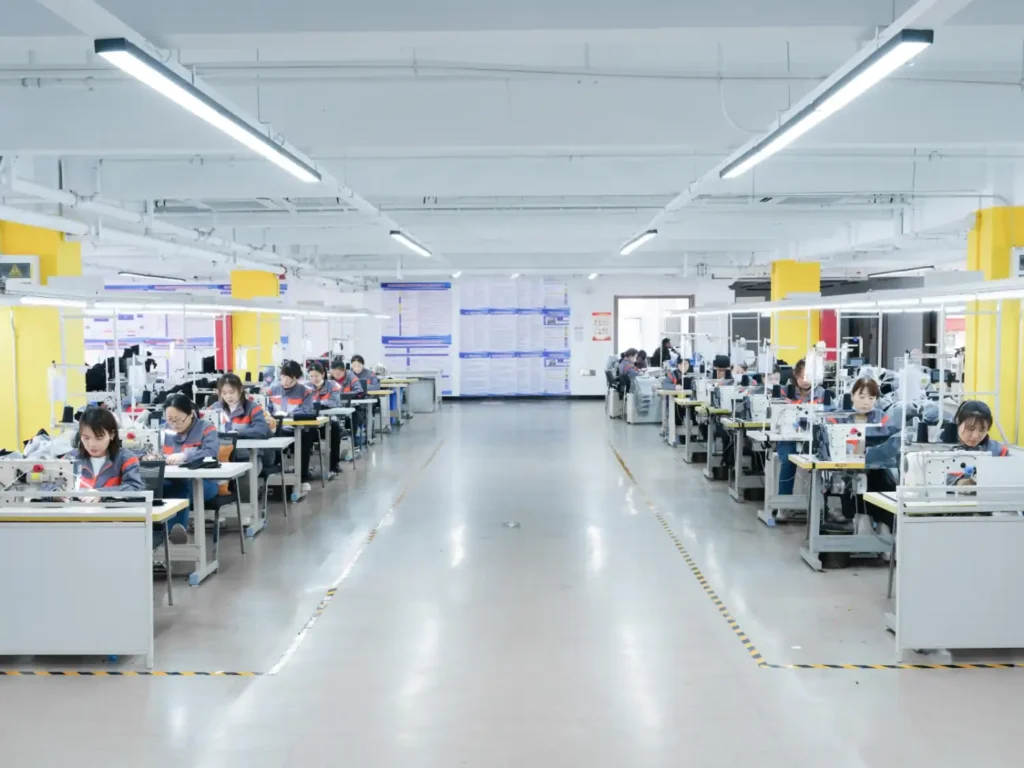
Price quotes are easy to fake, which is why credentials matter. When you’re vetting an ankle support brand development partner, dig into three things first: certifications, production capacity, and verification ability.
Check the credentials that actually matter:
Production proof: Ask for facility photos, video walkthroughs, production line count, and warehouse space. A genuine custom ankle brace manufacturer will show you these without hesitation.
Category experience: Look for suppliers with 5+ years specifically in sports or orthopedic braces. They already understand sizing, packaging, and QC standards for this niche.
Certifications: ISO 9001, ISO 13485, CE, FDA (if applicable), and BSCI are the common checkpoints. For anything marketed with medical claims, ISO 13485 plus CE/FDA documentation isn’t optional.
Quality proof: Request raw material test reports, finished product QC reports, and past client case studies covering tensile strength, abrasion resistance, and breathability.
Stability signals: Ask about repeat customer rate, long-term client percentage, and trade show participation. These signal delivery consistency.
Industry benchmarks to hold suppliers to:
MOQ: 500 pcs is standard for a compression ankle brace factory. If they’ll accept smaller trial orders, that’s a plus for testing new products.
Sample lead time: 7 days is typical. Complex builds (ROM hinges, air bladders) take longer.
Bulk production: 20 days is the common benchmark. Get it in writing.
Response time: Under 24 hours signals a supplier worth working with.
On-time delivery rate above 95%, backed by 6-12 months of shipping records, separates dependable partners from risky ones.
Red flags that mean walk away: marketing photos only, refusal to share certificate numbers or test reports, vague answers about production lines, and MOQ or lead times that keep changing story to story.
Brand Customization Workflow: From Brief to Bulk Production
Six stages separate your idea from a shipped ankle brace bulk order. Skip one, and you’ll pay for it later in delays or rework.
1. Brief Confirmation (0-7 days)
Lock 10 details before quoting starts: support level, target FOB cost (e.g., $2-3/unit), retail price point, order quantity, delivery deadline, logo files, and compliance needs (CE, FDA, ISO 13485). Vague briefs stretch quoting by 2-4 weeks. Missing regulatory requirements adds another 4-8 weeks.
2. Design & Sampling (3-6 weeks for OEM, 1-3 months for ODM)
OEM builds from scratch: first sample takes 7-14 days, with 2-3 revision rounds typical. ODM starts from existing molds, so you’re customizing color, logo, and packaging on a proven base. Sampling fees run $200-500, often credited against bulk orders. Incomplete logo files (low-res, no vector) add 7-10 days.
3. Sample Testing (2-16 weeks)
Stability, compatibility, and stress testing catch problems before mass production. Skip this step and post-launch return rates can exceed 10%. That’s far costlier than testing upfront.
4. Spec Lock & Contract (3-10 days)
One spec sheet defines everything: BOM, sizing tolerances, packaging materials, defect thresholds, and payment terms (commonly 30% deposit, 70% before shipment). Without a written reference sample, disputes over “what was agreed” become unresolvable.
5. Mass Production (30-60 days)
A pilot run (2-5% of volume) validates the process first. Reputable compression ankle brace factories run 3-5 QC checkpoints throughout: incoming materials, in-process, and final inspection.
6. Shipment (20-35 days ocean freight + 3-10 days customs)
Confirm Incoterms (FOB/CIF/DDP) and packaging dimensions early. A 5-10% packaging size miscalculation can spike freight costs 5-15%.
Third-party inspection (PSI at 80% completion) drops catastrophic batch failure risk from over 5% to under 2% — cheap insurance on any serious ankle brace private label order.
Logo & Branding Techniques for Maximum Visibility
Your logo choice makes or breaks the perceived value of your custom ankle brace.
Pick the right technique for the job:
Embroidery: Costs $0.5-2/piece plus a $15-30 setup fee. Survives 50+ washes at 80-90% integrity. Best for premium branding on straps and outer panels. Keep logos under 50mm to avoid stiffness against skin.
Screen print: Runs $0.15-0.6 per color per unit, with $10-25 per color in plate fees. Holds up for 30-50 washes when cured properly. Cheapest option when you’re under 2 colors and ordering 200+ units.
Heat transfer/sublimation: No plate costs, $0.3-1/piece for small logos. On polyester-based ankle supports, sublimation can match the fabric’s lifespan, 50-80 washes minimum.
Placement rules that protect your product:
Avoid the ankle bone and Achilles zones entirely. Thick embroidery or rigid logos there cause blistering and pressure pain. Put your primary logo on the lateral strap or outer sleeve, away from flex points. A 90-100mm logo width reads clearly from 3-5 meters; anything under 70mm gets lost.
Lock brand consistency with Pantone:
Specify exact Pantone Solid Coated codes for your compression ankle brace factory to match. Demand a ΔE color difference under 2-3. That’s the standard serious medical device branding programs hold suppliers to across every production run.
Packaging & Presentation That Builds Custom Ankle Brace Brand Trust
Three seconds. That’s all a shopper gives your product on a shelf before deciding whether to pick it up or walk past it. In that window, they need to identify the category, understand what makes your custom ankle brace different, and trust it enough to buy. Miss any of those three, and you’ve lost the sale before you had a chance to make it.
Pick packaging based on channel:
Polybag + header card: Cheapest option, 30-60% lower cost than boxes. Great for high-density shelf displays (20-40% more SKUs per shelf width) at sporting goods retailers. Weak on perceived quality, so lean hard on certification badges and clean labeling to compensate.
Color box: 3-5x more design surface than a header card. This is where you tell your brand story, show usage steps, and display certifications. Boxes over 300gsm with foil stamping read as premium, critical for medical device branding where trust equals sales.
Display racks: Best for chain retailers wanting shelf dominance. Shows 3-10 units in one branded block, reinforcing consistency across a big-box aisle.
What actually belongs on the packaging:
A brand promise under 15 characters (“Built for athletes,” “Clinically tested”)
3-5 illustrated usage steps
A sizing chart cross-referencing ankle circumference and shoe size, cutting sizing-related returns by 5-15%
Certification badges (CE, FDA, ISO 13485) grouped in one trust block near your logo
Clear packaging with visual instructions also cuts support tickets 20-40%, since “how do I wear this” is the number one question buyers ask before purchasing an ankle support product.
Costs, MOQ & Profit Margin Planning in Custom Ankle Brace
Smart brands build a should-cost model first, then negotiate from data.
Break your unit cost into four buckets: materials, labor, packaging, and overhead. For a neoprene-based custom ankle brace, every 1mm increase in thickness adds 20-35% to material cost. Standard neoprene runs $4-6/kg, sports-grade density hits $6-9/kg, and hypoallergenic premium blends climb to $10-12/kg. Structural complexity also matters. A simple sleeve takes 1.5-2 minutes of labor per unit. A multi-panel build with straps and stays takes 3.5-5 minutes, making labor cost 80-150% higher.
Volume changes your math fast. Scaling from 1,000 to 5,000 units typically drops material pricing 3-8% and cuts labor/overhead allocation another 5-10%, shrinking total unit cost by 8-15%.
Model Your Breakeven Before You Order
Run the numbers before you lock in your bulk order. Suppose fixed development costs (molds, samples, tooling) total $4,300. At a target retail of $7/unit and variable cost of $3.15/unit, your contribution margin is $3.85. Breakeven is about 1,112 units, so your MOQ should be 1,100-1,500 units to cover development costs on the first run.
To earn $2,860 in profit as well, you need around 1,852 units. Round that to 2,000 units for your first year forecast.
Use Tiered Pricing to Boost AOV
Offering entry, mid, and premium tiers (48%, 54%, and 57% margins) lifts average order value by about 96% compared to a single-SKU offer, and can boost total profit by 143% at the same sales volume.
Real Custom Ankle Brace Case Study: From Concept to Market-Ready Brand
Numbers convince skeptics better than promises. Here’s a real 500-unit ankle brace private label launch, timed and priced from brief to inventory-in-hand.
Day 0-2: Brand sends spec sheet (moderate support, elastic knit, figure-8 strap) plus logo files. Factory returns a feasible BOM and EXW quote range within 48 hours.
Day 3-5: Design confirmation. Factory delivers cross-section drawings with exact material thickness, fabric GSM options, and logo mockups. Brand signs off after 2-3 revisions, each turned around in 12-24 hours.
Day 6-12: Sampling. Physical master sample ships in 7 days; courier transit adds 3-5 days.
Day 13-18: Sample testing. Brand wear tests for comfort, checks logo durability and packaging fit. Minor tweaks (color, logo size) skip a second full sample.
Day 19-20: PO placement. 30% deposit, 70% before shipment — standard across compression ankle brace factories.
Day 21-40: Mass production. 500 pcs complete in roughly 20 days with built-in QC at incoming materials, mid-line, and final inspection stages.
Day 41-50+: Final QC, export docs, freight booking. Sea transit adds 18-30 days depending on destination port.
Total door-to-market: around 57 days by sea, compressible to 45 days with air freight for launch inventory.
The Cost Math That Makes This Work
A third-party PSI inspection costing $300-400 catches defective batches before they ship — cheap insurance against $5,000-10,000 in returns and reputation damage. Skipping the pre-production sample correlates with 10-15% return rates versus 3-5% for brands that run one.
The KPI benchmark worth chasing: design freeze within 7 days of RFQ, sample approval within 30 days, first inventory in-market within 90 days from initial idea.
Common Questions Before You Start Your Custom Ankle Brace Brand
Can I place a small trial order?
Yes. Standard MOQ runs 300-500 pcs per style/size for finished braces, dropping to 200-300 pcs for elastic knit sleeves. Complex builds (hinges, rigid stays) need 500-1,000 pcs because of tooling costs.
Can I customize only packaging, not the product itself?
Yes. Most compression ankle brace factories ship their standard brace under your label. Packaging MOQ sits at 1,000-3,000 boxes or cards, costing $0.07-0.21 per unit for print and design. One catch: you must disclose the actual manufacturer’s name, address, and medical device registration on the box.
Do I need medical device certification?
Depends on your claims. In the US, most ankle braces fall under Class I, needing FDA labeling compliance but no premarket approval. The EU requires CE marking under MDR (also mostly Class I). If you’re marketing “medical-grade” support for post-op or rehab use, get a registered SKU first. Pure sports or compression positioning can launch with material test reports alone.
How fast can I get to market?
Repackaging an existing structure takes 30-45 days total. New structural development (custom straps, hinges) takes 3-6 months, plus registration time if going medical.
What’s realistic wholesale pricing?
Knit sleeves run $1-2 per unit. Strap-reinforced designs run $3-6 per unit. Rigid or hinged braces run $8-15 per unit. Retail markup usually runs 3-5x factory cost.
Launching Your Private Label Ankle Brace Brand
Start by locking your price tier. Sports protection braces sell at $25-40 with 60%+ margin targets. Medical-grade recovery braces run $35-60. Daily-support sleeves sit at $15-25. Pick one, then keep landed cost (product + packaging + freight + duty) under 35-40% of retail.
Your first order should hit 300-800 units across 2-3 sizes, weighted toward M/L. Budget accordingly — 600 units at $3.50 FOB runs roughly $2,100 in product cost, $3,000-3,500 landed.
Working with an experienced OEM ankle brace supplier, compresses the entire six-week process into one guided workflow — spec sheets, sampling, and compliance handled under one roof.
Conclusion
Building a successful ankle brace brand comes down to making smart decisions early: choosing the right manufacturer, nailing your product specs, and treating packaging as seriously as the product itself.
A reliable OEM ankle brace partner helps you avoid costly mistakes, hit your MOQ without draining cash flow, and get to market faster than you thought possible.
If you’re serious about launching a custom ankle brace line that builds real trust and repeat customers, reach out to a manufacturer who’s done it before. AOFIT has helped brands go from concept to shelf-ready product, and they can help you do the same. Contact us and start the conversation today.