
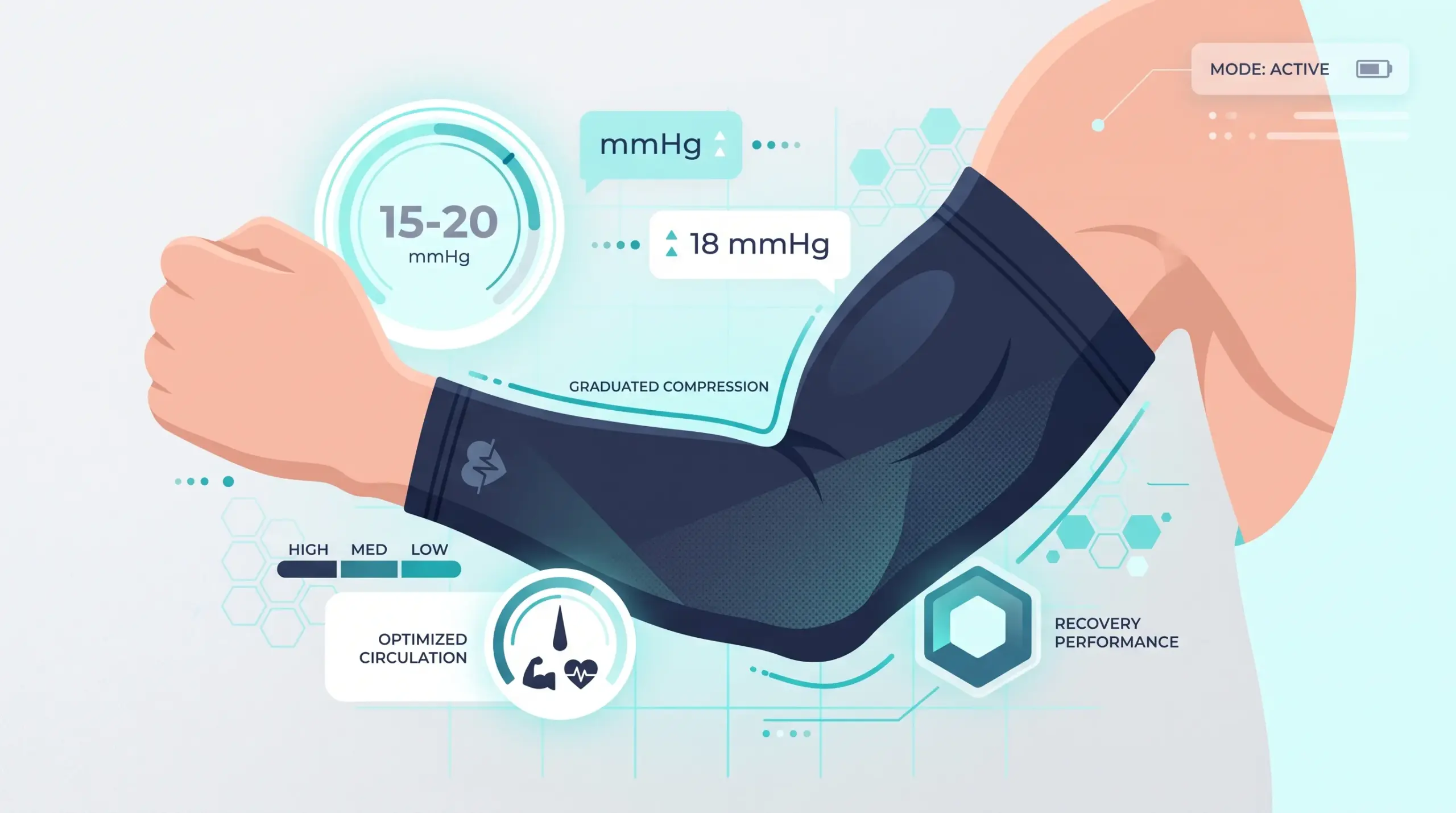
Maybe you’re dealing with post-surgery swelling. Maybe you’re deep in a hard training block, or managing a chronic condition like lymphedema. Either way, someone has probably told you to try an arm compression sleeve, and you’ve been skeptical ever since.
Here’s the truth: it works. Please make sure you understand how compression works, what it can do for your situation, and how to choose the right one.
This guide covers all of it:
- How graduated compression mechanics work
- What mmHg levels mean for you
- Which features make a real difference and which ones are just marketing
Start wearing the right arm compression sleeve for the right reasons.
What Is an Arm Compression Sleeve and How Does It Work?
An arm compression sleeve is a precision-engineered elastic tube. It applies measurable, controlled pressure to your arm’s soft tissues with specific force.
It covers your wrist to your mid-bicep or upper arm. The pressure is measured in mmHg (millimeters of mercury). That number tells you more about a sleeve’s effectiveness than any brand name on the label.
The Pressure Scale You Need to Know
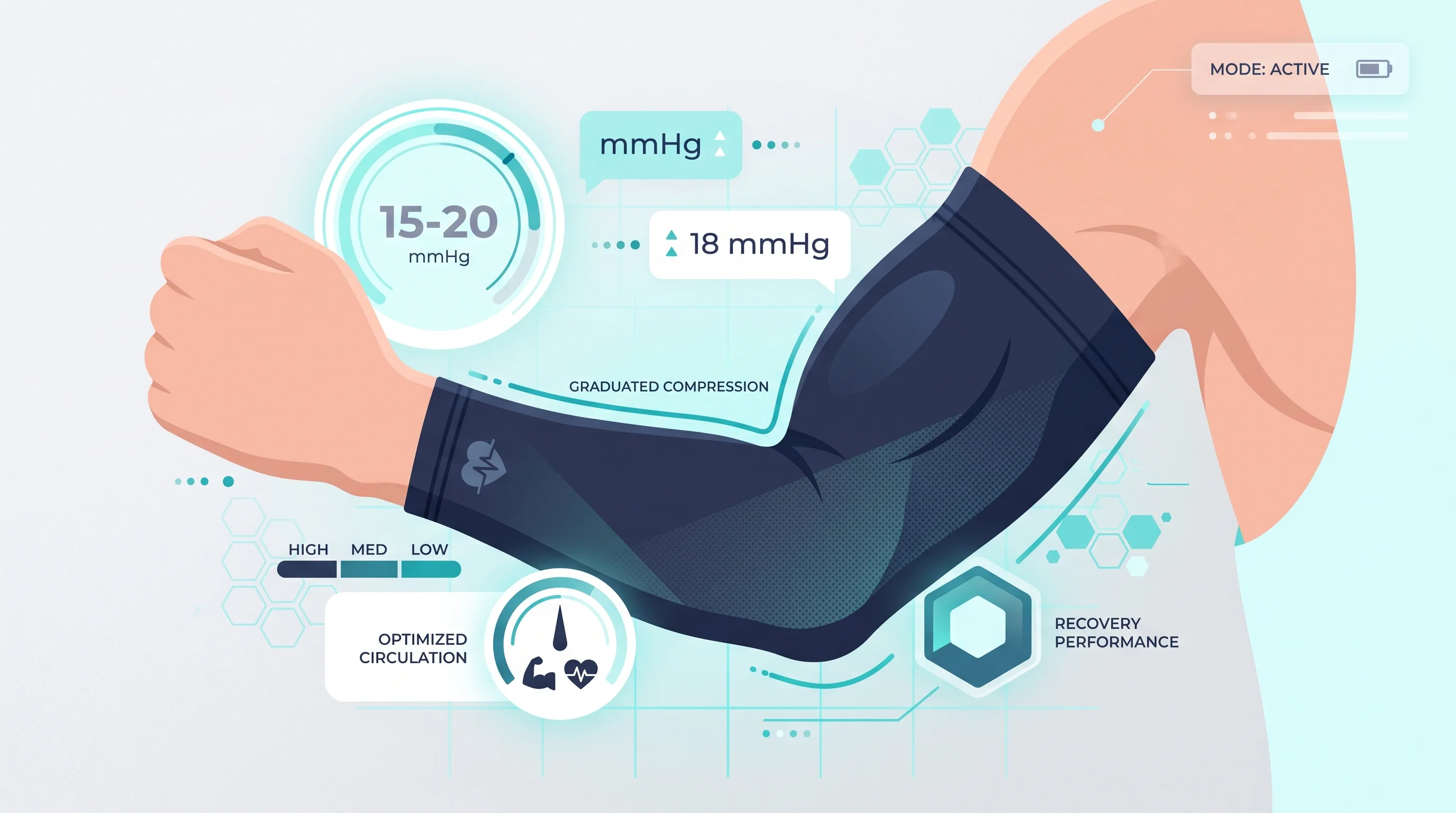
Compression sleeves vary widely in force. The medical and sports industries use this standard classification:
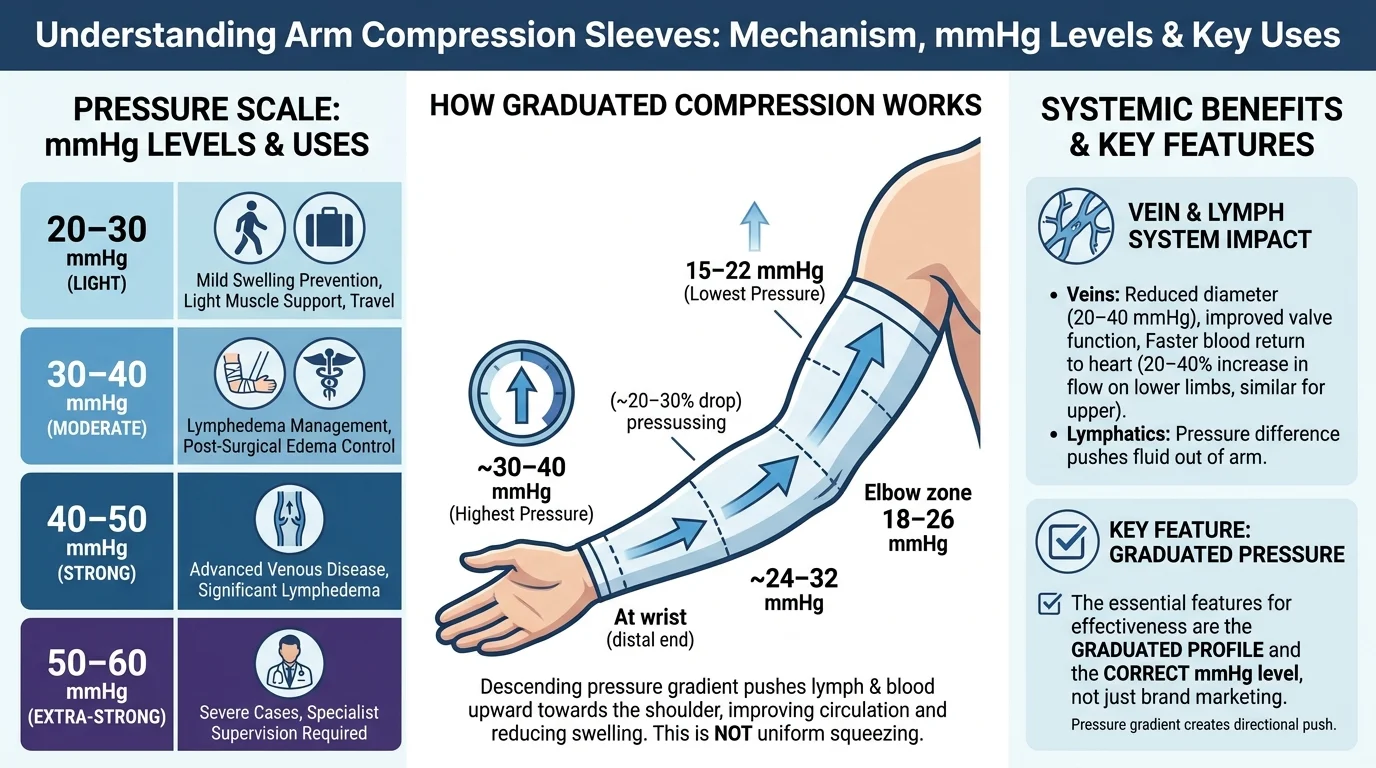
- 20–30 mmHg (Light) — mild swelling prevention, light muscle support, travel
- 30–40 mmHg (Moderate) — lymphedema management, post-surgical edema control
- 40–50 mmHg (Strong) — advanced venous disease, significant lymphedema
- 50–60 mmHg (Extra-strong) — severe cases, specialist supervision required
How Does Graduated Compression Move Fluid?
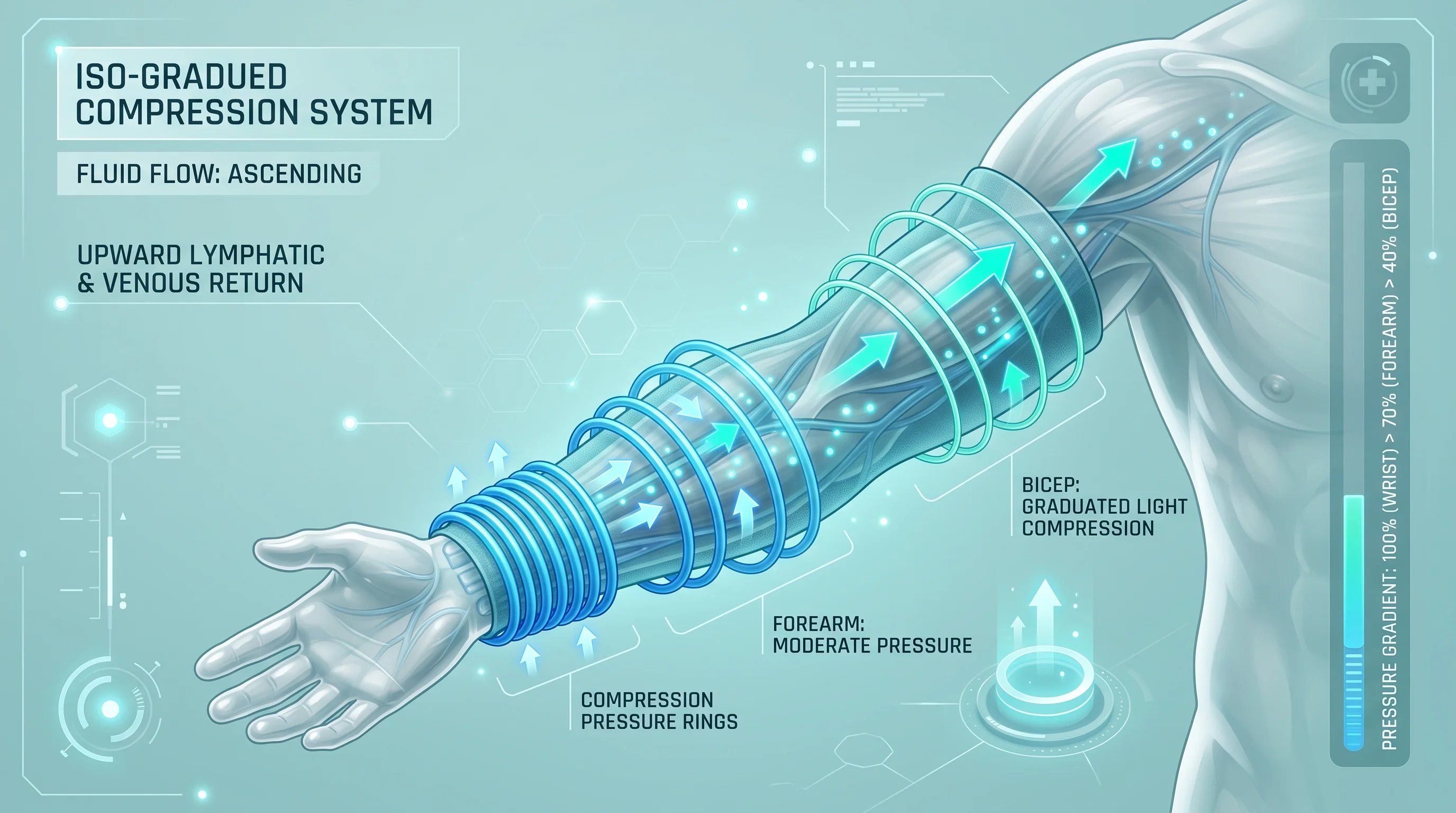
Here’s the core mechanism: the sleeve is tighter at the wrist and looser at the upper arm. That pressure gradient — not uniform squeezing — is what produces real results.
A standard lymphedema day sleeve follows this pressure profile:
- Wrist: ~30–40 mmHg (highest)
- Mid-forearm: drops ~20–30%, landing around 24–32 mmHg
- Elbow zone: 18–26 mmHg
- Proximal upper arm: 15–22 mmHg (lowest)
That descending slope creates a directional push through your arm. For veins, it narrows superficial vessels and improves valve function. Research on lower limbs shows venous flow increases of 20–40%, and your upper limb works the same way. For the lymphatic system, the pressure difference between wrist and shoulder pushes lymph fluid upward and out of the arm.
What It Does to Each System?
- Veins: External pressure at 20–40 mmHg reduces vein diameter, improves valve function, and speeds blood return to the heart
- Arteries: Mild compression supports microcirculation without cutting off inflow — pressure stays well below systolic thresholds
- Muscles: It reduces fiber vibration during activity. Less vibration means less micro-trauma and faster recovery after exercise
- Lymph: Steady graduated pressure keeps fluid moving in the right direction after manual drainage therapy
What Makes the Fabric Work?
The compression is material science. Most sleeves use a Nylon + Spandex core blend, sometimes with polyester added:
- Nylon (70–80%): Provides high tensile strength and abrasion resistance. It holds the knit structure together through repeated use
- Spandex (20–30%): Stretches 150–200% of its resting length while holding target mmHg. More spandex content means stronger, more responsive compression
- Polyester (in sport blends): Adds moisture-wicking, breathability, and UV resistance
Manufacturers knit the sleeve as a seamless circular tube. The knit density changes throughout — tighter at the wrist, more open toward the upper arm. This builds in the graduated pressure profile without any seams that could create pressure points.
Size matters here too. The wrong size doesn’t just feel uncomfortable — it fails to work properly. Too small, and you get over-compression above 60 mmHg, which carries tourniquet risk. Too large, and you get under-compression below your target mmHg, with little to no therapeutic benefit. Sizing goes by arm circumference measurements.
Key Benefits of Wearing an Arm Compression Sleeve
Circulation, Swelling, and Fluid Control
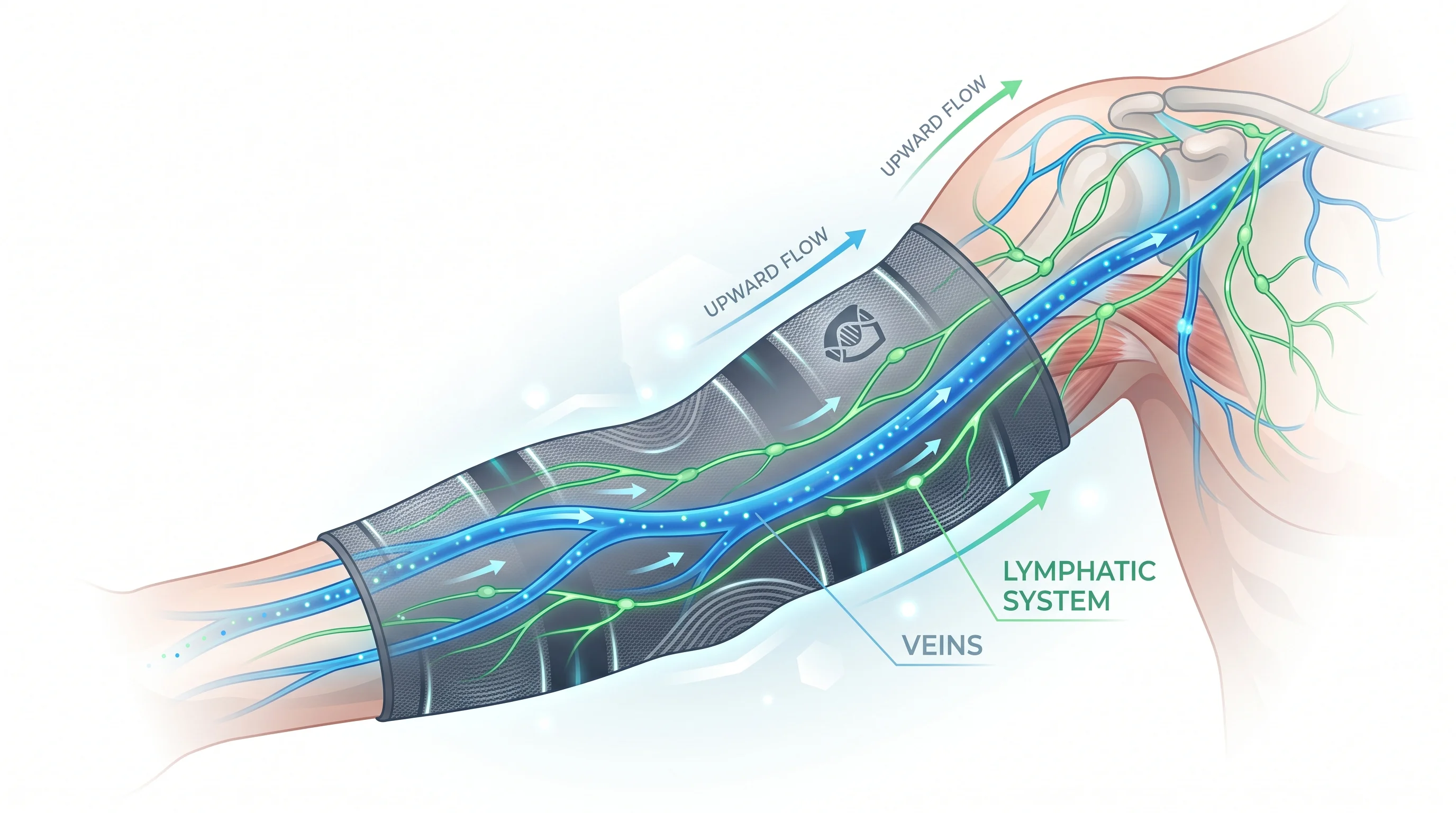
Graduated compression does one thing really well: it moves fluid. The descending pressure pushes blood and lymph out of the arm. That pressure drop directly cuts that heavy, tight, swollen feeling.
For people managing chronic swelling or flying long-haul, this is the sleeve’s most proven effect. You get less fluid pooling, better blood return flow, and a noticeably lighter arm.
Muscle Vibration and Recovery
During repetitive motion, muscles vibrate constantly. That steady micro-vibration builds up into soft-tissue strain and fatigue over time. Compression sleeves for arms reduce that vibration. Less vibration means less micro-trauma per session.
Post-workout, the effect keeps going. The most consistent finding across recovery research is reduced DOMS (delayed-onset muscle soreness) and a faster return to normal muscle function.
The sleeve won’t make you measurably faster or stronger — the research on that is mixed. What you do get is less soreness, less fatigue, and a fresher feeling the day after hard training.
Pain Relief for Tendonitis and Elbow Conditions
For tennis elbow, golfer’s elbow, tendinitis, and arthritis, the sleeve applies gentle stabilizing pressure. That pressure reduces irritation from repeated movement.
It’s symptom management, not a cure. But it’s practical, consistent relief that lets you train, work, and move with less pain day to day.
There’s also a proprioception benefit: you get better awareness of your arm position. That awareness helps you avoid the uncontrolled movements that make overuse injuries worse.
UV Protection and Environmental Defense
UPF 50+ rated sleeves block 98% of UV radiation. That’s solid protection for outdoor runners, cyclists, and field sport athletes spending long hours in the sun.
Past sun protection, the fabric also acts as a physical barrier against scrapes and minor skin irritation. Plus, moisture-wicking blends help manage temperature in both directions, warming your arm in cold air and cooling it through sweat management in heat.
Who Should Use an Arm Compression Sleeve: Use Cases by Audience
Arm compression sleeves aren’t a one-size-fits-all fix. They’re a targeted tool. The people who get the most out of them know why they’re wearing one, and they choose the right setup for their situation.
1. Athletes: During Training and After
Basketball players, tennis players, lifters, CrossFit athletes, your sport loads your arm hard and often. An arm compression sleeve earns its place in your kit.
- During activity, the target range is 15–25 mmHg. That pressure cuts down muscle vibration and keeps the elbow and forearm stable through tough, repetitive effort. A basketball game runs 40–48 minutes of active play. A three-set tennis match can last 2–4 hours. Wear it through the full session.
- After training, step down to comfort level. Keep the sleeve on for 1–3 hours post-session. This helps flush metabolic waste, lower inflammation, and reduce next-day soreness. Runners and strength athletes report shorter DOMS windows when they use compression during recovery.
Total wear for sports use: keep it under 8 hours in a single stretch.
2. Chronic Pain and Repetitive Strain: Desk Workers, Tradespeople, Assembly Line Workers
For desk workers, tradespeople, and assembly line workers, 8–25 mmHg is the practical range. It stabilizes without cutting off movement. Wear it during the high-demand part of your day — that might mean a 4–8 hour stretch at a keyboard or on a production line. Check in every 2–3 hours. Numbness or color change means it’s time to reduce pressure or take it off.
One pattern worth noting: your pain builds through the afternoon and peaks by evening. Put the sleeve on before that window starts.
3. Travelers and Desk-Bound Workers: Circulation on Long Hauls
Four-plus hours in a plane seat or behind a wheel slows arm circulation. Fluid pools. Arms swell. For most healthy travelers, 8–25 mmHg handles it well.
Anyone with a history of venous thrombosis or post-surgical lymphatic changes needs a tighter protocol. That means medical-grade 25–40 mmHg, prescribed by a clinician, worn for the full flight — plus about 2 hours after landing while circulation gets back to normal.
4. Lymphedema and Post-Surgical Patients: Medical-Grade Use
This group plays by different rules. Had breast cancer surgery with lymph node removal? Managing Stage I arm lymphedema? A compression sleeve is part of your treatment plan.
The standard approach:
– Wear it during the day, remove it at night
– Put it on first thing in the morning, before fluid builds up
– Wear it for any arm activity — lifting, exercise, even household tasks
Research on high-risk post-surgical patients shows a clear result: using a compression sleeve as a preventive measure cuts the rate of arm swelling compared to standard care alone. Starting early and staying consistent can push back lymphedema onset in at-risk patients.
Pressure range here is 30–40 mmHg. A lymphedema therapist fits and prescribes it.
One firm rule across all medical use cases: a diagnosed condition means your clinician sets the sleeve prescription. Compression level, fit, and wear schedule are not guesses.
Compression Levels Explained: How to Choose the Right mmHg?
The mmHg number on the label is the single most important spec on any compression sleeve. Get it right, and the sleeve works. Get it wrong, and you’re either wasting money on glorified fabric or squeezing your arm harder than it should be.
Here’s the breakdown:
| mmHg Range | Classification | Best For |
|---|---|---|
| 8–15 mmHg | Mild / OTC | Everyday wear, light fatigue, general circulation support |
| 15–20 mmHg | Moderate / Low Medical | Travel, mild swelling, early-stage prevention |
| 20–30 mmHg | Firm / Class I Medical | Sports recovery, tendonitis, light-to-moderate venous conditions |
| 30–40 mmHg | Extra-Firm / Class II Medical | Lymphedema, post-surgical edema, significant swelling |
The OTC-to-Medical Boundary You Shouldn’t Cross Without Guidance
- Most sport arm compression sleeves land between 15–25 mmHg. That range cuts muscle vibration, supports recovery, and handles mild swelling. No prescription needed.
- Cross into 30–40 mmHg territory, and the rules change fast. That range targets moderate-to-severe lymphedema and serious venous conditions. You need a professional fitting.
Warning signs that your compression is wrong:
– Numbness or tingling in your fingers
– Arm feels colder than usual
– Swelling increases after wearing
– Visible indentation marks at the sleeve edges
Any of these show up? The sleeve is too tight. Drop to the next level down, or get a proper measurement from a clinician.
Simple rule: At or below 20 mmHg, healthy adults can pick their own level. At 20–30 mmHg, check with a clinician first if you have any existing circulatory condition. At 30 mmHg and above, get it prescribed.
Key Features to Look for in an Arm Compression Sleeve
Fabric and Breathability
The standard build is nylon or polyester (70–85%) paired with spandex (15–30%). That blend gives you elastic recovery without the sleeve going slack after a few weeks of use.
The two main application types go in different directions:
- Sport sleeves run light — under 120 g/m². You get moisture-wicking layers, open-mesh ventilation zones near the elbow, and sometimes antimicrobial silver-ion yarn to control odor during long sessions. High-end options go through ASTM D737 airflow testing.
- Warmth-focused sleeves flip the priority. Heavier knit, over 120 g/m². Built for cold-weather training or post-surgery static wear where heat retention matters more than sweat transfer.
Know which environment you’re buying for. A high-performance sport arm compression sleeve is the wrong choice for lymphedema management.
Sizing and Fit: The Two-Finger Test
You need four circumference measurements: wrist, forearm (2–3 cm below the elbow), elbow, and upper arm at its widest point. Cross those against the brand’s actual centimeter ranges.
One useful check is the taper index — the ratio of upper arm width to wrist width in the sleeve pattern. A healthy range is 1.6:1 to 1.9:1. Too narrow, and the upper arm squeezes. Too wide, and the wrist goes slack. Either way, your graduated compression profile breaks down.
Then do the two-finger test: slide two fingers under the wrist cuff. They should fit with a firm but effortless slide. Can’t get them in — too tight. A third finger fits — too loose. After 10–15 minutes of wear, check for any skin discoloration, numbness, or cold sensation below the sleeve.
Sport vs. Medical Construction
Sport sleeves (no prescription needed):
– Recovery and light activity: 10–15 mmHg at the wrist, dropping to 8–12 mmHg at the upper arm
– Endurance training: 15–20 mmHg tapering to 10–14 mmHg
– Variable-knit zones keep compression firm at the wrist and open near the elbow for ventilation
Medical-grade sleeves (clinician-fitted):
– Pressure range: 20–40 mmHg
– Made from latex-free, hypoallergenic elastic — rated for long-term skin contact
– Certified under FDA 510(k) or CE Class I/IIa standards. Pressure mapping gets verified across flexion and rotation positions
– Slim profile that layers under clothing. Not built for airflow
Additional Features Worth Checking
- UPF 50+ — blocks ≥98% UV radiation. Check for explicit labeling in the spec sheet. UV exposure breaks down spandex faster, so a high UPF rating also extends the sleeve’s lifespan.
- Anti-slip edge system — the most reliable designs use a wide silicone grip band at the wrist, a textured inner lining along the forearm, and a contoured upper-arm hem that follows muscle shape. Test it yourself: the sleeve should not migrate more than 1 cm vertically during 10 bicep curls with a light weight.
- Seamless or flatlock stitching — this removes pressure ridges at the elbow fold and underarm. That detail matters most during 4–8 hour wear stretches.
How to Wear an Arm Compression Sleeve?
Step-by-step: how to put it on
- Turn the sleeve inside out, or roll it down toward the wrist opening.
- Insert your hand through the opening and anchor the sleeve at your wrist first.
- Roll or pull the fabric upward along your forearm at a steady pace.
- Smooth out wrinkles as you go. Every fold in the fabric creates a pressure ridge. That ridge turns into a real issue over a 4–8 hour wear stretch.
- Your sleeve has an upper-arm band? Adjust it last — snug, not tight.
- Before you put it on: skin should be clean and dry. Applied lotion? Wait until it soaks in. A damp or oily arm makes the sleeve shift, bunch, and drop its graduated pressure profile fast. Rubber gloves help you grip the fabric without snagging it.
- Timing matters. For lymphedema and post-surgical use, put the sleeve on first thing in the morning before fluid starts building up. For sports, wear it through training and keep it on during the recovery window after.
- How to tell if the fit is right: the sleeve sits firm against your skin. No deep indentation marks. No numbness. No tingling. No cold sensation below the cuff. Any of those show up? The sleeve is too tight. Take it off and check your size again.
Limitations and What Arm Compression Sleeves Cannot Do
It Won’t Make You Perform Better
One randomized crossover trial put forearm compression sleeves to the test. Researchers studied 18 climbers and measured grip strength, endurance, blood lactate, and perceived fatigue. The result: no significant improvement on any measure. No performance benefit was confirmed. Be skeptical of claims that compression boosts grip or endurance in climbing and bouldering.
Recovery has a similar ceiling. Wearing a sleeve for just 12 hours after upper-arm exercise showed no meaningful improvement in muscle damage recovery. Across 19 studies, 7 found compression offered nothing beyond placebo on objective markers — things like muscle enzyme levels and strength recovery. The sleeve manages soreness symptoms. It does not repair muscle faster.
It Won’t Stabilize Your Joints
A compression sleeve applies uniform external pressure. That’s different from structural support at a basic level. It cannot:
- Stabilize the elbow or shoulder under high-load movements like throwing or spiking
- Reduce joint torque or shear forces during explosive activity
- Change the mechanics of your shoulder-elbow-wrist chain
It may improve proprioception: your awareness of arm position. It will not reduce injury risk at the structural level.
Who Should Not Wear One
- Peripheral artery disease (PAD): External compression can restrict arterial blood flow and worsen ischemia
- Severe peripheral neuropathy: Reduced sensation means you can’t detect over-compression or skin damage
- Open wounds, active skin infection, or recent skin grafts: Compression raises infection risk and disrupts healing
- Skin reactions: Redness, rash, or contact dermatitis — stop wearing it right away
Conclusion
Managing lymphedema, pushing through a tough training block, or dealing with that stubborn elbow ache that won’t quit — the right arm compression sleeve makes a real difference. Consistent, graduated pressure works in your favor. It reduces swelling, supports circulation, and helps your arm function the way it should.
The key is matching the sleeve to your specific needs. That means the right compression level, the right fit, and the right material for your everyday demands. A sports athlete and a post-surgical patient need very different things. Now you have the framework to tell them apart.
Ready to find yours? Browse AOFIT‘s arm compression sleeves collection to compare options built for real recovery and real performance. The best sleeve is the one you’ll wear, day in, day out.