
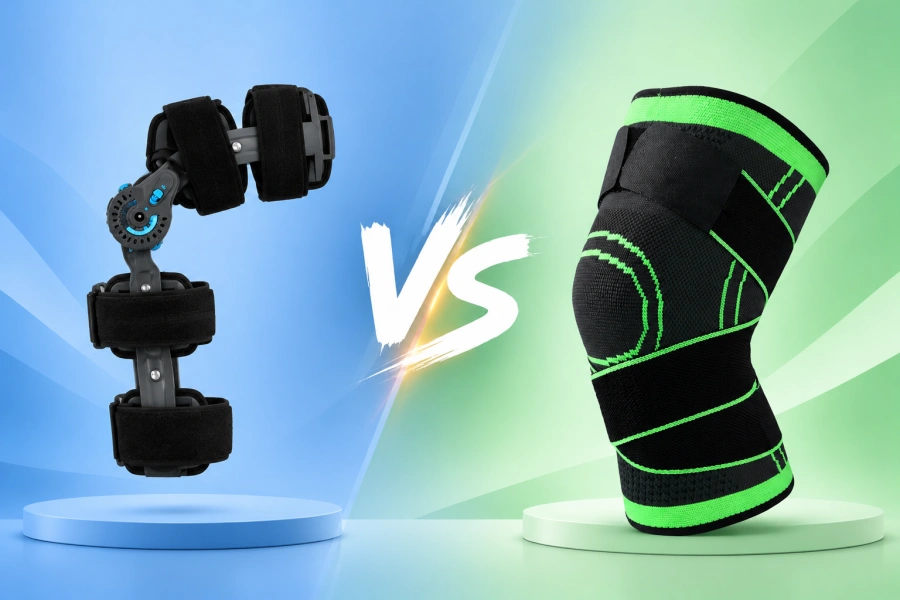
Your knee hurts, your cart is full of options, and every product page swears it’s the right one. Here’s the short version. A hinged knee brace controls motion for knees dealing with instability, ligament or meniscus trouble, or recovery after surgery. A knee compression sleeve offers warmth, light support, and everyday comfort on a knee that works fine on its own. Pick the wrong one, and you’ll either get too little protection or far more restriction than you need. Below, we compare the two side by side, match each to real situations from rehab to weekend runs and lifting, and finish with a quick buying checklist so you get it right the first time.

Quick Decision: Hinged Knee Brace or Compression Knee Sleeve?
The deciding factor is whether your knee gives way.
If it only hurts, swells, or feels stiff, start with a compression knee sleeve. If it wobbles, shifts, or buckles, go with a hinged knee brace.
Why they’re not interchangeable
A knee sleeve is made of elastic fabric that delivers even knee compression, warmth, and better joint awareness. It helps ease mild swelling and stiffness, but it cannot repair torn cartilage or ligaments, and it will not stop your knee from buckling or shifting sideways.
A hinged knee brace adds side supports, hinges, and straps to give you structural knee support and lateral stability.
Match your situation
|
Situation |
Better choice |
Why |
|---|---|---|
|
Mild pain, light swelling after activity |
Compression knee sleeve |
Pressure improves comfort, though it does little for severe traumatic swelling. |
|
Mild osteoarthritis, stiffness |
Sleeve, or a hinged style if you need more stability |
Warmth eases stiffness, while hinges add side support. |
|
Giving way, clear knee instability |
Hinged knee brace |
You need physical joint structure to keep the knee aligned. |
|
MCL/LCL injury |
Hinged knee brace |
Supports both sides of the joint. |
|
ACL injury, reconstruction, or recovery |
Functional or hinged brace, as your doctor directs |
Controls motion without replacing rehab. |
Safety note: See a doctor if you notice a visible deformity, cannot bear weight, or keep buckling. If you are recovering from surgery, follow your surgeon’s exact instructions on brace model, hinge settings, and wearing time.
Hinged Knee Brace vs Compression Knee Sleeve: Side-by-Side Comparison
|
Factor |
Hinged Knee Brace |
Compression Knee Sleeve |
|---|---|---|
|
Support level |
Medium to high. Side hinges, rigid or semi-rigid uprights, and adjustable straps block unwanted side-to-side movement. |
Low to medium. Elastic fabric wraps the knee snugly without restricting sideways motion. |
|
Structure |
Single-axis or polycentric hinges, polycarbonate or metal bars, and a wrap-around or pull-on sleeve. |
Knit or neoprene fabric, silicone grip strips, and sometimes a patellar opening or gel ring. No rigid parts. |
|
Main job |
Acts as a knee stabilizer and ligament support brace for the ACL, MCL, and LCL, often adding warmth and light compression. |
Provides light support and compression to reduce swelling and improve joint awareness. |
|
Range of motion |
Polycentric hinges track natural bending, though the hardware can get in the way during deep squats, kneeling, or prolonged sitting. |
Minimal restriction. Comfortable for running, lifting, walking, and all-day wear. |
|
Best for |
Noticeable instability, ligament rehabilitation, contact sports, and recovery after surgery. |
Mild pain, minor swelling, arthritis symptoms, preventive support, and daily warmth. |
|
Comfort |
Heavier and bulkier. It can trap heat, slip down, rub, or pinch around the hinges. Wrap-around styles adjust easier than pull-on designs. |
Thin, lightweight, and easy to slide on. Sizing too small can pinch, leave deep skin indentations, or cause numbness. |
|
Typical price |
Around $25–$130, with medical-grade models running $176–$210. |
Around $10–$45, while premium medical-grade sleeves reach $90–$100. |
|
Medical input |
Recommended after surgery, for torn ligaments, or when dealing with pronounced instability. Poor sizing causes slipping or excessive pressure. |
Usually not needed for simple aches. See a clinician if you experience persistent pain, severe swelling, mechanical locking, or joint buckling. |
For hinged knee braces, DonJoy models run from $26.99 to $115.99, BioSkin models sit around $116–$129, and the Bauerfeind GenuTrain S costs about $209.90. On the knee sleeve side, DonJoy options run about $17.99, PowerLix costs $19.99, BioSkin sells for $41, and Bauerfeind reaches $99.90.
Three details the table can’t show
-
Hinged doesn’t mean only “hard.” Wrap-around hinged braces provide compression and joint feedback alongside rigid support. The hinges themselves take off very little physical load during motion, so they will not function as an unloader.
-
Sleeves can help with arthritis. Neoprene and elastic sleeves relieve discomfort by holding in warmth, applying gentle compression, and improving movement feedback. They help calm day-to-day symptoms without physically realigning the joint.
-
Hinged isn’t automatically better for osteoarthritis. A flexible knee sleeve is lighter and far more comfortable for dull aches and minor swelling. If your knee actually wobbles sideways or gives out under you, step up to an adjustable knee brace with hinges.
What Is a Hinged Knee Brace? Structure, Support Level and Best-Fit Users
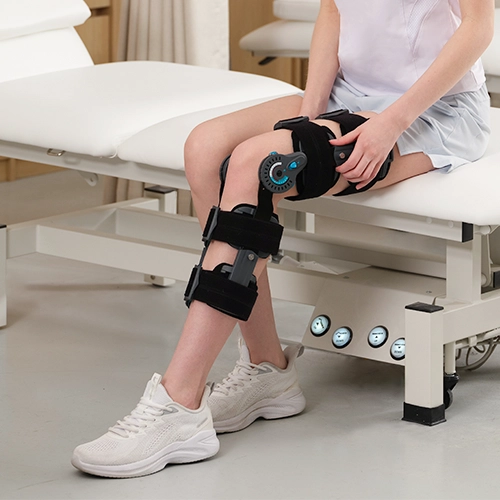
A hinged knee brace is a knee stabilizer that lets the joint bend and straighten while preventing sideways sliding. That gives you controlled motion, which is the entire point.
What’s inside the hinged knee brace
-
Bilateral hinges: Positioned on each side of the knee, these hinges curb unwanted inward and outward movement. This is the main difference between a hinged brace and a sleeve.
-
Rigid side uprights: Struts made of aluminum, polymer, or carbon fiber carry the load along your thigh and lower leg, adding lateral stability for knee instability.
-
Adjustable straps: Usually, 2–4 straps secure the brace above and below the joint. If you fasten them too loosely, the brace slips down; if you pull them too tight, you risk pressure points, numbness, or poor circulation.
-
Flexion/extension stops: Post-op models use dials or removable stops that adjust across 0–120°. Always set both hinges identically.
-
ROM locking: The hinge can lock the knee straight or limit movement to a set range.
-
Anti-slip design: Silicone grippers, contoured cuffs, and breathable liners keep the brace in place.
Four support levels
|
Brace type |
Construction |
Support |
Best-fit use |
|---|---|---|---|
|
Compression sleeve |
Elastic fabric, no hinge |
Low |
Mild pain, swelling |
|
Soft hinged brace |
Fabric body, flexible hinges |
Moderate |
Mild-to-moderate instability, sports |
|
Rigid functional brace |
Rigid uprights, mechanical hinges |
High |
ACL/PCL or collateral instability |
|
Post-op ROM brace |
Locking hinges, adjustable stops |
High, controlled |
Surgical recovery |
Clinical guidelines support hinged braces for grade II–III MCL/LCL injuries, typically for 3 weeks with grade II and 6 weeks for grade III. Post-surgery recovery takes roughly 4–6 weeks, depending on your surgeon’s protocol. The AAOS guideline does not recommend routine bracing after isolated primary ACL reconstruction.
Who it fits best
-
Ligament support brace users: Active adults managing ACL/PCL deficiency, grade II–III sprains, or knees that repeatedly give way. Basic adjustable models run about US$20–$90.
-
Post-surgery knee brace users: Patients recovering from ligament repairs, needing meniscus tear support after surgery, or rehabbing patellar or quadriceps tendon tears. ROM-locking models sell for around US$50–$100, including standard options at US$86.89 and carbon-fiber models at US$99.99.
-
Adjustable knee brace users: Anyone dealing with changing swelling levels, shifting leg measurements, or progressive ROM requirements.
Know the trade-offs
Hinged braces deliver strong lateral control, adjustable motion limits, and joint protection during walking, work, or sports. They also come with practical drawbacks:
-
Bulk can get in the way of kneeling, cycling, and deep squats.
-
Heat and friction can cause skin irritation or blisters.
-
Incorrect stop settings can cause joint stiffness or leave the knee unsupported.
-
A brace never replaces muscle strengthening or guided physical therapy, and relying on one can give you false confidence.
What Is a Compression Knee Sleeve? Benefits, Limits and Best-Fit Users
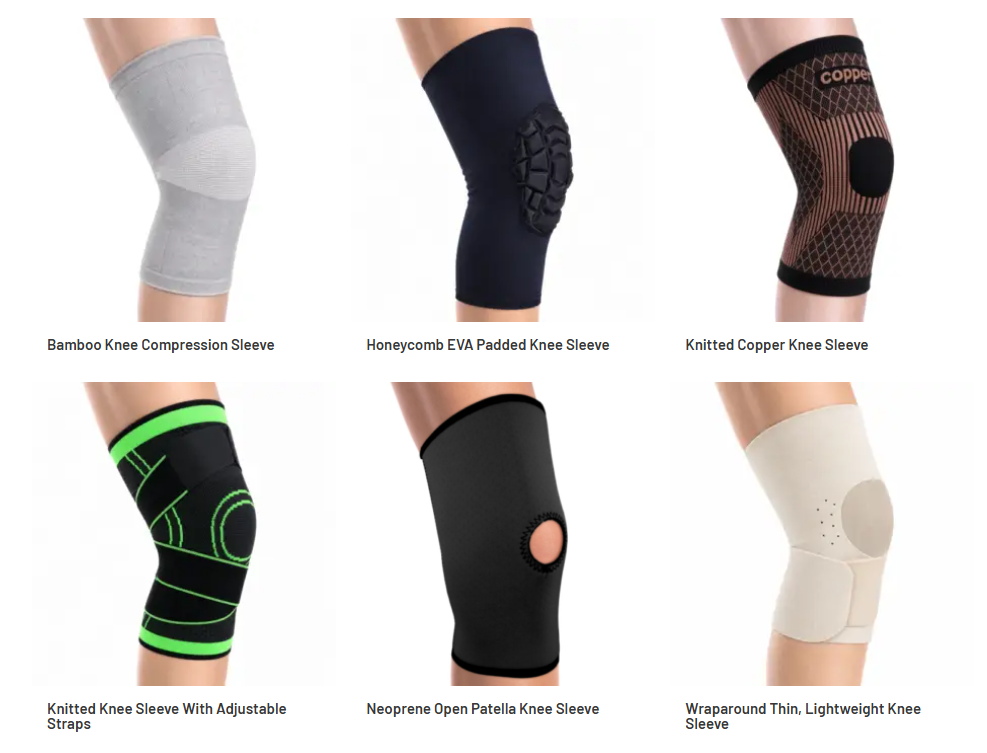
A compression knee sleeve is an elastic tube you pull up over your joint and go about your day. Made from knit fabric, spandex/nylon, or neoprene, it wraps the knee in continuous pressure and warmth without rigid hinges or adjustment straps.
What it does
-
Compression: Gentle knee compression helps limit mild swelling in soft tissue while giving the joint a supported feel.
-
Warmth: Neoprene and heavier knits trap body heat, which eases stiffness as you start moving.
-
Proprioceptive feedback: Constant surface pressure can heighten your awareness of joint position.
-
Mobility: Most designs let you bend and extend your leg through its normal range while fitting smoothly beneath everyday pants.
Benefits
-
Light and discreet: Comfortable for walking, lifting, running, court sports, and daily routines.
-
Short-term relief: A 2025 randomized study of 60 people with knee osteoarthritis showed immediate improvements in pain and balance while wearing neoprene sleeves.
-
Better activity tolerance: Systematic reviews indicate that people with osteoarthritis often experience less pain and move more easily during workouts when wearing a sleeve.
Limits
-
Sleeves do not provide structural stabilization. A basic knee sleeve cannot control side-to-side knee instability, protect an ACL-deficient joint, or stabilize torn ligaments and cartilage. Anyone needing mechanical meniscus tear support should look at a hinged knee brace instead.
-
Fabric cannot prevent buckling or hyperextension. Elastic compression lacks the rigid uprights and mechanical stops needed to physically block a joint from giving out.
-
Compression does not repair tissue or alter alignment. Long-term recovery still requires physical therapy, strength training, and weight management.
-
Poor fit causes problems. A sleeve that fits too tightly can cause skin irritation, discoloration, numbness, tingling, or fluid buildup at the edges. Take it off if those symptoms appear. Over time, sweat and stretched-out elastic can also cause the material to bunch and slide down.
Who it fits best
-
Anyone dealing with mild stiffness or joint ache during walks, gym workouts, or rec league games
-
People managing mild osteoarthritis symptoms who prefer lightweight support
-
Anyone with minor, lingering fluid buildup who tolerates constant, mild pressure
-
Athletes looking for joint warmth and tactile feedback without the bulk of a brace
See a clinician instead if you experience joint locking, deformity, sudden severe swelling, persistent numbness, swelling in the calf, an inability to bear weight, or a suspected ligament or meniscus tear.
Price tiers and picking one
-
Entry-level: about US$20–35 (McDavid at US$22.99–29.39)
-
Mid-range: about US$40–60 (Bauerfeind Sports Compression Knee Support at US$44.99)
-
Premium knit: about US$80–90 (Bauerfeind at US$89.99)
Pick your size based on your thigh and calf circumference. Choose a breathable knit for all-day comfort or neoprene if you want deeper heat retention during short workouts. You want a snug fit that stays anchored without cutting off circulation or numbing your skin. If you have osteoarthritis, evaluate the purchase over several sessions to see if walking and exercise feel noticeably easier.
Which One for Your Situation? Scenario-Based Recommendations
Get a clear diagnosis first, then look for gear. Use these scenarios as a practical guide, and verify the choice with your clinician.
Injury and instability
-
Suspected ACL, MCL, or LCL injury, or a knee that gives way: Get an evaluation first. If you need a hinged functional brace, have a clinician fit it so hinge alignment, strap tension, and range of motion match your specific injured ligament. A brace will not reliably prevent ACL injuries in an uninjured knee.
-
Meniscus tear, catching or locking: A hinged brace provides short-term meniscus tear support only when an orthopedist prescribes it. While it can reduce feelings of instability, it will not repair torn tissue. If you do not have a prescription, wear a sleeve for light comfort. See an orthopedist right away if you cannot straighten the knee, or if you deal with true locking, recurring swelling, or trouble bearing weight.
-
Repeated buckling: Pair a hinged brace with targeted strength training and neuromuscular rehab. Never use a brace to cover up worsening instability.
After surgery
-
ACL reconstruction: Wear the exact post-surgery knee brace your surgeon prescribes. In one common protocol, patients stay non-weight-bearing for 0–2 weeks with the brace locked in full extension, then progress to gradual weight-bearing and unlocking around week 6. The AAOS found no clear clinical benefit to routine bracing after isolated primary reconstruction, so surgeons do not always mandate one.
-
MCL or multiligament surgery: Movement limits differ from standard ACL recoveries. An MCL protocol often starts with motion restricted to roughly 30°–90°. Multiligament repairs can require locking the joint in full extension for about 4 weeks. Never adjust the hinge stops on your own.
Arthritis and swelling
-
Mild osteoarthritis, stable knee: Start with a neoprene sleeve. Wear it during painful activities, and take it off while sitting or sleeping.
-
Localized pain, alignment-related loading, or ongoing limits despite exercise: Ask your clinician about an unloader brace. These units are bulkier and depend on precise fitting to work properly.
-
Swelling after activity: Treat mild fluid buildup with a sleeve, elevation, ice, and reduced activity. Seek prompt medical care for swelling that is severe, recurring, or follows an injury, as well as any swelling accompanied by fever, redness, calf pain, or joint locking.
Sports and training
-
Running, walking, gym sessions with a stable knee: Stick to a sleeve or run bare-kneed. A hinged brace adds bulk you do not need on a stable joint.
-
Weightlifting: A knee sleeve keeps the joint warm and provides light compression, but it cannot make up for excessive loads or sloppy depth control.
-
Basketball, tennis, cutting sports: Reserve a hinged brace for diagnosed instability or a clinician-guided return to play. It does not reliably prevent an initial ACL injury or a reinjury.
-
Skiing: Wear a professionally fitted hinged knee brace for documented ACL, MCL, or LCL deficiencies. Choose a knee sleeve if your knee is structurally sound.
How to Choose the Right Size and Features?
Step 1: Measure your leg
Use a flexible tape measure. Keep it level against bare skin or over the thin layer you plan to wear underneath.
-
Thigh: 15 cm above the center of the kneecap.
-
Knee width or circumference: right across the center of the joint, following the brand’s directions.
-
Calf: 15 cm below the center of the kneecap.
Some sports braces use a seated measurement. Sit with your knee bent at 90° to measure your thigh at its widest point, then keep your ankle at 90° to measure the widest part of your calf.
Always check your measurements against the manufacturer’s size chart.
If your numbers fall between two sizes, check the brand’s sizing notes or contact the seller before you buy. Review the return policy too, particularly for rigid hinges or contoured frames.
Step 2: Test the fit
The brace should fit snugly without causing pain. Walk, bend your knee, and sit down for a few minutes. It shouldn’t slide down, twist around your leg, bunch behind the knee, or pinch. Check the fit again after 10–15 minutes on your feet, since sweat and normal swelling will change how the straps sit.
Loosen the straps, reposition the frame, or move up a size if you notice:
-
Numbness or tingling
-
Cold skin or discoloration below the joint
-
Increased swelling
-
Deep strap marks
-
Pinching or pressure at the kneecap
Step 3: Check materials
-
Breathable fabric: mesh, perforated neoprene, spacer fabric, or moisture-wicking knit.
-
Moisture control: an absorbent, quick-drying inner lining.
-
Skin protection: flat seams, padded borders, and covered hardware.
-
Washability: removable liners or machine-washable fabrics.
Wear the brace for 30–60 minutes around the house to check for trapped heat, itching, chafing, or redness.
Step 4: Check the hinged-brace features
If you need extra stability or ligament support from a knee stabilizer, look for:
-
Separate upper and lower straps that let you fine-tune tension above and below the joint.
-
Hinge alignment centered at your knee’s natural bending axis, right along the joint line.
-
Bilateral hinges. Dual hinges on the inside and outside protect against lateral force far better than a single hinge.
-
Range-of-motion stops. Check the available angle limits and make sure the stops are easy to swap out or remove.
-
Anti-slip system: silicone grip strips, textured panels, or cross-strapping that keeps the brace anchored.
-
Low-profile or covered hinges, which resist snagging and hold up better in contact sports.
-
Side fit: dedicated left or right designs versus universal models.
Step 5: Match the brace to your use
-
Light support or mild instability: an elastic sleeve or flexible compression brace.
-
Cutting and pivoting sports: an adjustable knee brace with bilateral hinges, anti-slip grips, and secure straps.
-
Post-injury protection or prescribed movement limits: a hinged model with adjustable flexion and extension stops.
-
Daily wear: lightweight, breathable fabrics with a soft lining and easy-to-reach straps.
How to Wear Your Knee Support?
A good brace worn badly works about as well as a bad one. Always check the product guide first, since strap order, wash care, hinge settings, and wear times differ from model to model. If you have an adjustable knee brace or a post-surgery knee brace, your clinician’s instructions override everything below.
Putting on a compression knee sleeve
-
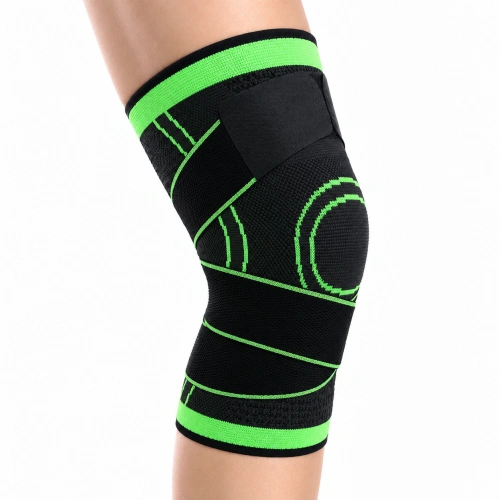
Center the opening over your kneecap so the sleeve sits evenly above and below the joint.
-
Pull it up straight. The fabric needs to lie flat without folds, bunching, or twisted seams.
-
Check both ends to make sure the edges do not roll into your skin when you walk or bend your knee.
-
Aim for a snug, supportive fit. If you notice deep pressure marks, numbness, or skin color changes, it is too tight.
-
Keep your skin clean and dry. Lotion, oil, and ointment cause irritation and make the fabric slip.
Putting on a hinged knee brace
-
Straighten your leg, or position it as your clinician directs.
-
Line up the hinges with your joint line, level with the center of your kneecap. On bilateral braces, place one hinge on the inside of the knee and the other on the outside.
-
Keep the hinge bars centered over the joint and parallel to your leg.
-
Fasten all straps loosely to start.
-
Tighten the top and bottom straps first to anchor the frame, then secure the two straps closest to your knee.
-
Recheck hinge alignment, pull out any slack behind your leg, and fasten the strap ends.
The straps should feel secure without pinching. A good rule of thumb from clinical guides is leaving room for one finger between the strap and your skin. After about 15 minutes of activity, check the fit and tighten the straps as the padding settles. Make sure the brace does not slip down, twist, or curl at the edges.
Check your skin
Take the brace off after the first hour and check the skin around, above, and below your knee. If you use a hinged brace throughout the day, take it off two to three times daily for a quick skin check unless your clinician advised against it.
Stop wearing it and get clinical advice if you notice:
-
Numbness, tingling, or loss of sensation
-
Pale, blue, purple, or cold skin
-
Increasing pain, pressure, bruising, blistering, or persistent redness
-
Increasing swelling
-
New weakness or trouble moving your foot or leg
A brace should never cause pain, bruises, or blisters.
Mistakes to avoid
-
Don’t touch the stops, locks, dials, or range-of-motion limits unless your clinician or physiotherapist tells you to. Hospital guidelines specifically warn against altering the dial settings set by your care team.
-
Don’t assume a good fit means it’s safe after surgery. Post-op braces often require specific locked angles, restricted motion, or around-the-clock wear.
-
Don’t shower or bathe in it unless the manufacturer or your clinician explicitly clears it.
-
Don’t overtighten to fix slipping. If the brace continues to slide, pinches pressure points, or will not stay lined up with your joint, stop using it and have the fit checked by a professional.
Explore Hinged Knee Braces and Compression Sleeves at AOFIT
AOFIT organizes its knee supports around the level of control your joint needs. Find the right match below, then head straight to the product page.
Match the product to your needs
-
Light support, running, gym training: The Compression Knee Sleeve uses a nylon/spandex blend roughly 0.6 mm thin. It wicks sweat and gives you full range of motion.
-
Adjustable pressure and a firmer fit: Choose the Adjustable Knee Brace or the Knee Sleeve with Adjustable Straps. The sleeve features dual straps and cross-tension closures that stay locked in place.
-
Side stability with everyday flexibility: The Soft Hinged Knee Brace pairs dual hinges with breathable compression fabric and adjustable straps, making it comfortable for all-day wear and rehab transitions.
-
Maximum control: The Rigid Hinged Knee Brace relies on metal or polymer hinges and a reinforced frame. It prevents sideways wobble and twisting while allowing controlled knee flexion.
-
Collision-prone sports: The Honeycomb EVA Padded Knee Sleeve combines 10 mm high-density EVA padding with double-wave silicone grips. It handles hard impacts in volleyball, basketball, soccer, and combat sports.
For distributors and brands
-
OEM/ODM: Customize the logo, packaging, color, fabric, compression rating, hinges, and straps. Small-batch orders are available.
-
MOQ: Orders for the adjustable-strap sleeve and the Copper Knee Sleeve start at 500 pieces.
-
Materials: Fabrics can meet OEKO-TEX Standard 100 or 16 CFR 1610 guidelines. For medical supply channels, verify target market compliance requirements before ordering.
-
Inquiry tip: Include your chosen model, color, sizing breakdown, quantity per color, packaging requirements, and target destination.
To take the next step, request an OEM/ODM Quote, and ask for a sample and MOQ.
Conclusion
Finding the right brace for your knee matters far more than buying the most expensive option.
If you’re dealing with a ligament injury, a meniscus tear, post-surgery recovery, or real instability, a hinged knee brace gives you the structural support to keep the joint where it belongs. For mild compression, warmth, or a little confidence during workouts and daily life, a compression sleeve does the job without the bulk. Whichever you choose, get the fit right. Measure accurately, check the adjustability, and pick materials you’ll want to wear.
If your pain is severe or keeps getting worse, talk to a doctor or physical therapist before you buy anything.
Browse the hinged knee braces and compression sleeves at AOFIT, match one to your situation, and get back to moving.